
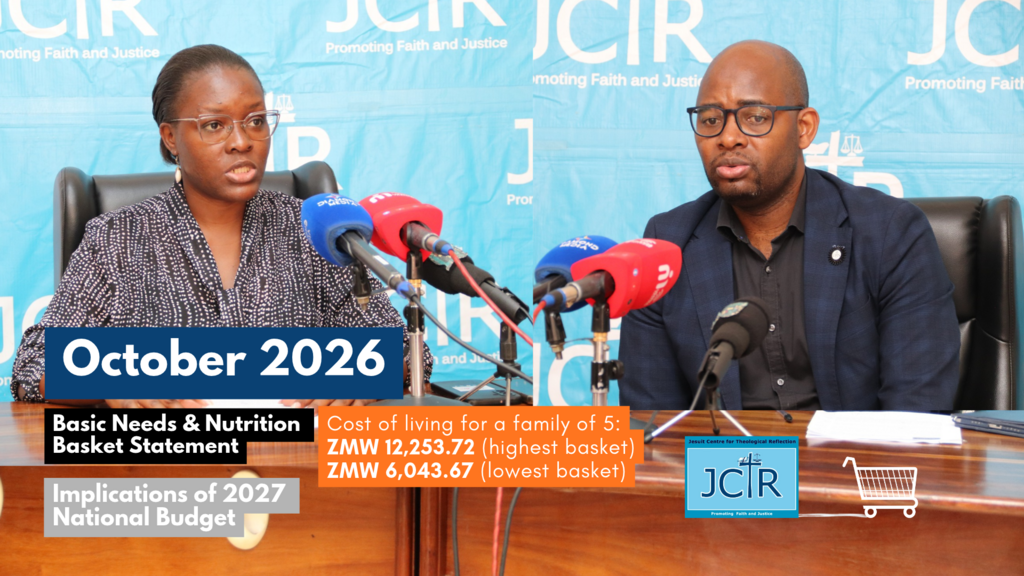
Tuesday, November 10, 2026 - Lusaka
The rising cost of essential household goods and services, coupled with emerging climate risks and proposed tax measures, underscores the need for the 2027 National Budget to translate economic gains into tangible improvements in people's living conditions.
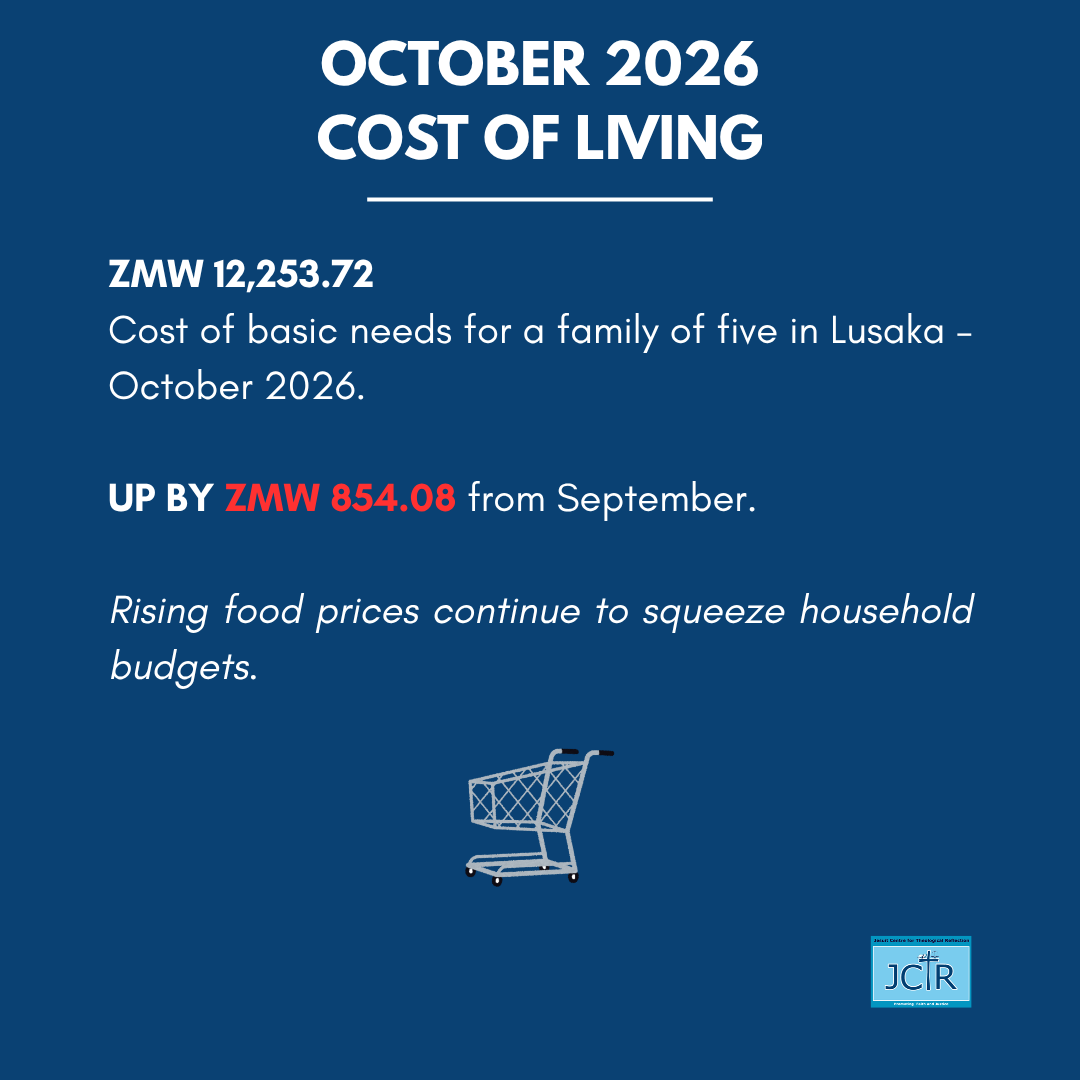
The cost of meeting basic household needs in Lusaka continues to rise, with the Jesuit Centre for Theological Reflection (JCTR) recording an increase in its Basic Needs and Nutrition Basket (BNNB) for a family of five to ZMW 12,253.72 in October 2026, up from ZMW 11,399.64 in September. This represents an increase of ZMW 854.08 in just one month.
The increase highlights the persistent pressure on household purchasing power, particularly among low-income families who continue to struggle to afford essential goods and services.
According to JCTR's October BNNB findings, the increase was largely driven by rising prices of essential food commodities, particularly vegetables and bananas. The cost of a 40kg bag of vegetables increased from ZMW 763.97 to ZMW 1,122.57, while the price of bananas rose from ZMW 18.95 to ZMW 29.06 per kilogram.
These price movements reflect the effects of seasonal availability and supply fluctuations. The scarcity of vegetables such as bondwe and pumpkin leaves during the hot season has contributed to the rising cost of food. The anticipated continuation of dry conditions associated with El Niño also raises concerns about further increases in food prices.
The cost of basic needs varies across the country
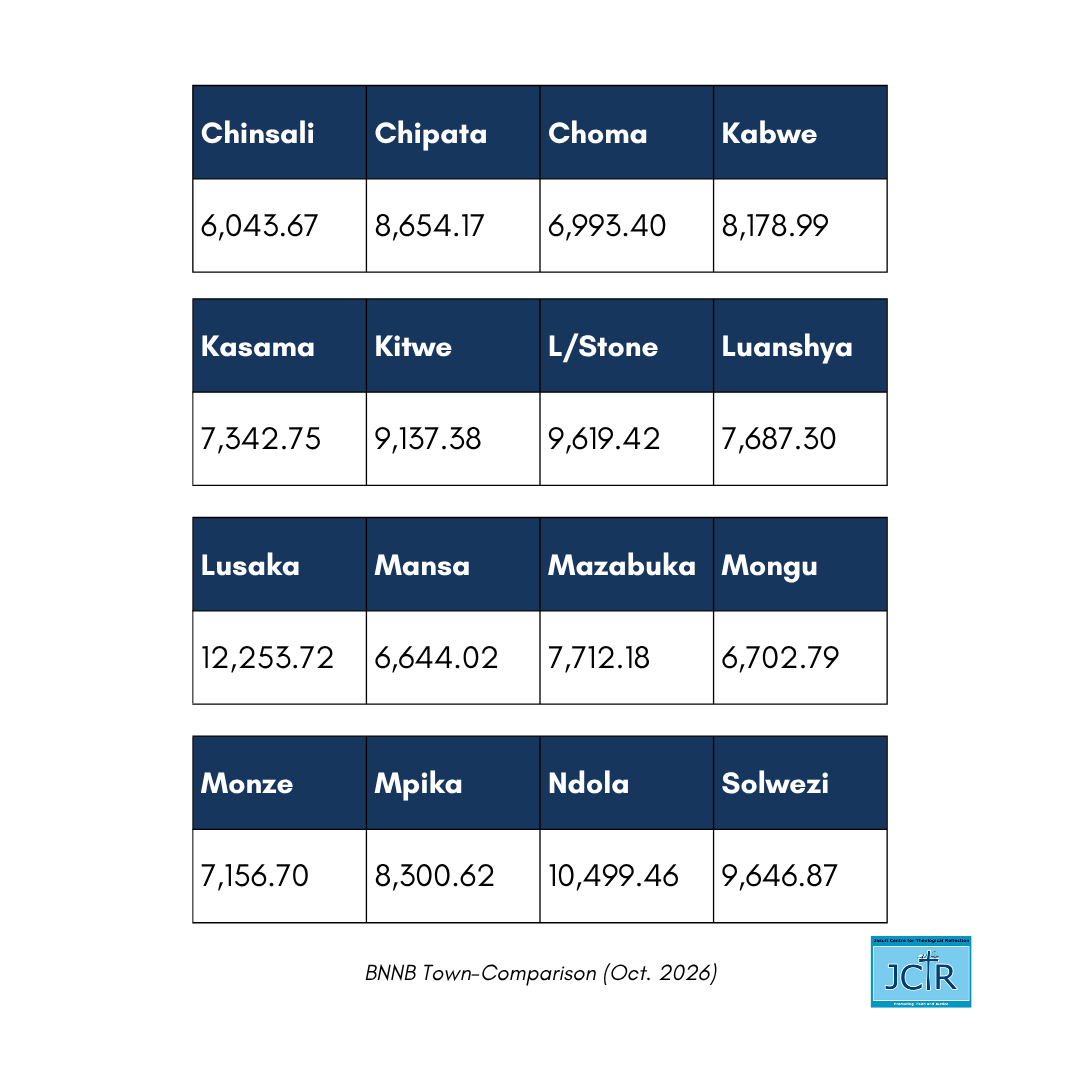
The October BNNB findings, covering 16 districts, reveal considerable differences in the cost of meeting basic household needs across Zambia.
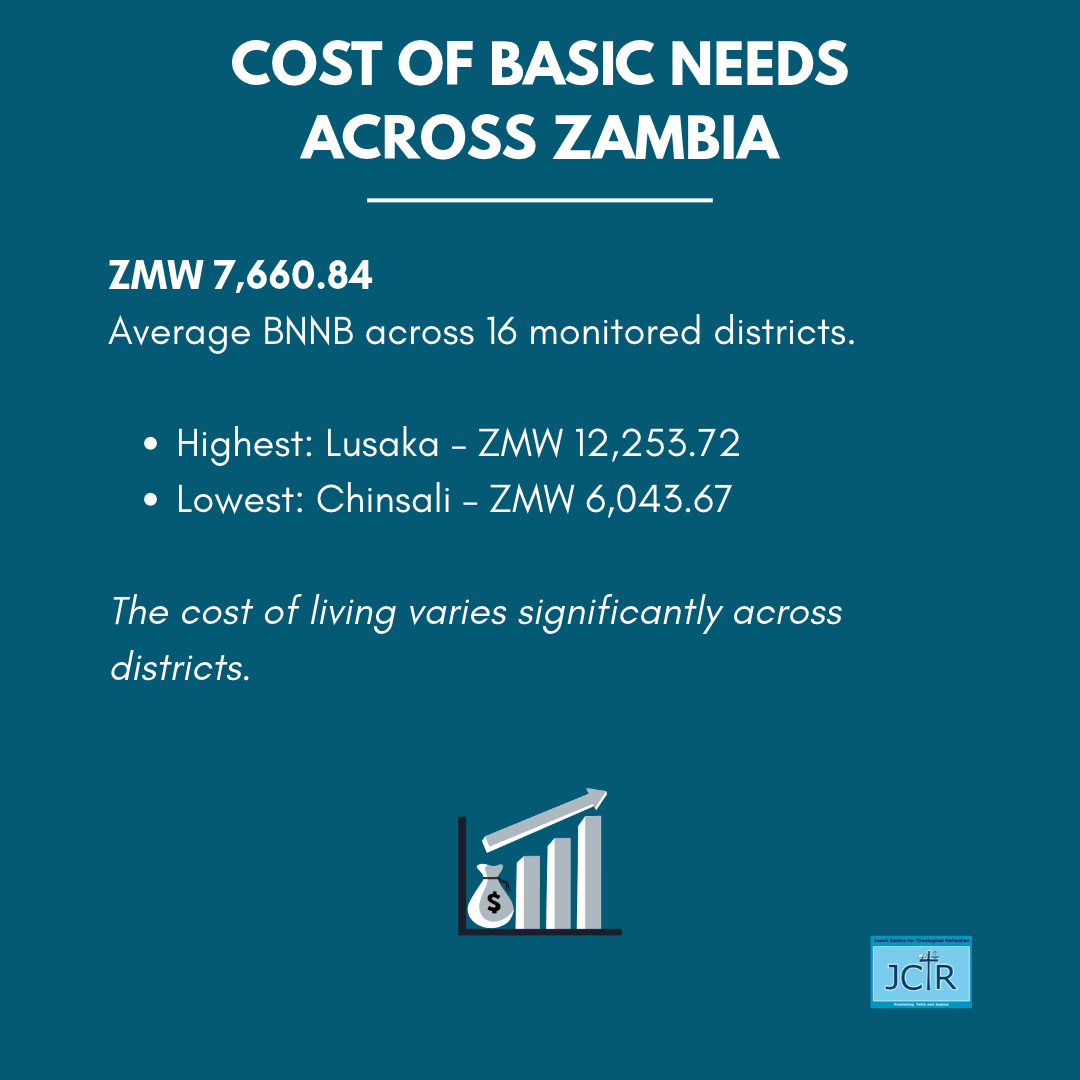
The average cost of the basket across the monitored districts stood at ZMW 7,660.84, with ten districts recording costs above this average and six recording costs below it.
Lusaka recorded the highest basket at ZMW 12,253.72, followed by Ndola and Solwezi. Chinsali recorded the lowest basket at ZMW 6,043.67, followed by Mansa at ZMW 6,644.02 and Mongu at ZMW 6,702.79.
In Lusaka, the cost of essential food items alone increased from ZMW 4,574.79 in September to ZMW 5,339.52 in October.
While food prices remain a significant driver of household expenditure, non-food essentials also account for a substantial proportion of the basket. Rent, energy and charcoal collectively contribute to the cost pressures facing households.
What does the 2027 National Budget mean for the cost of living?
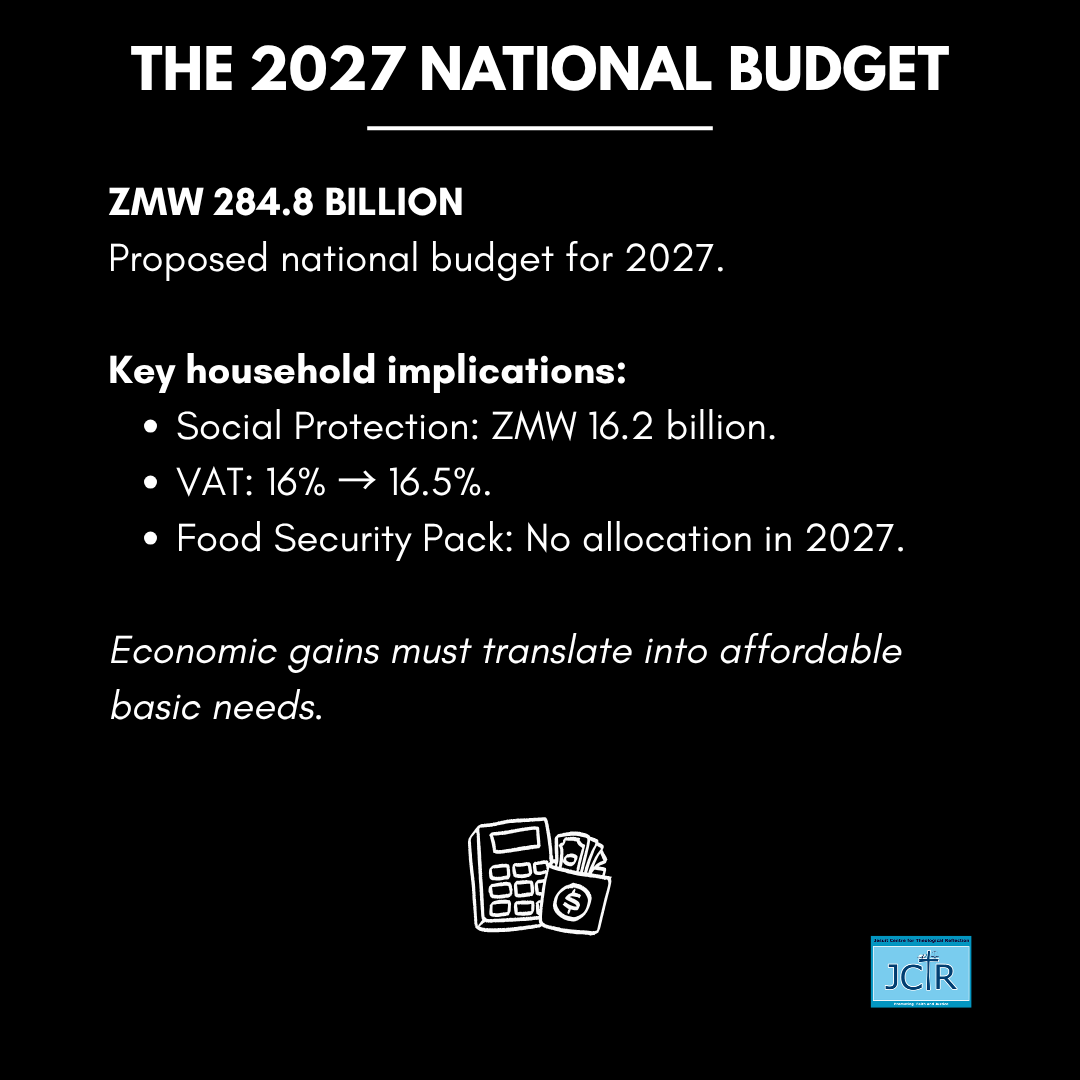
Against this backdrop, JCTR's October BNNB statement examines the implications of the 2027 National Budget, presented on 6 November 2026, which proposes expenditure of ZMW 284.8 billion.
Government has reported improvements in key macroeconomic indicators, including a reduction in annual inflation from 11.2 per cent in December 2025 to 6.3 per cent in October 2026. However, the October BNNB findings demonstrate that improvements in macroeconomic indicators do not necessarily translate into immediate relief for households.
JCTR acknowledges several positive measures in the proposed budget, particularly the increased allocation to social protection, which rises from ZMW 15.6 billion in 2026 to ZMW 16.2 billion in 2027.
The monthly Social Cash Transfer is also set to increase from ZMW 400 to ZMW 450 for eligible households, while households with persons with disabilities will receive ZMW 650, up from ZMW 600. Coverage is expected to expand to more than 1.6 million households.
However, the ZMW 450 transfer represents only approximately 3.7 per cent of the ZMW 12,253.72 required by a family of five in Lusaka to meet its basic needs. In Chinsali, it represents approximately 7.4 per cent of the basket.
JCTR therefore recognises the importance of these interventions while emphasising that social cash transfers alone cannot make basic needs affordable.
The increase in the School Feeding Programme allocation from ZMW 523 million to ZMW 1 billion is another welcome development. However, concern remains over the absence of an allocation to the Food Security Pack in the 2027 Budget, despite the programme receiving ZMW 1.51 billion in 2026. This is particularly concerning given the anticipated El Niño conditions and the potential effects on household food security.
Tax measures could introduce additional pressure on households
JCTR also raises concerns about the potential implications of some proposed tax measures for household purchasing power.
The proposed increase in Value Added Tax (VAT) from 16 per cent to 16.5 per cent, effective 1 January 2027, could increase the cost of various goods and services, including food items, cooking oil, bread, fish, eggs, charcoal, transport and personal care products.
For households already facing rising living costs, even relatively small increases in consumption taxes could further erode disposable incomes.
The upward revision of the mobile money levy could similarly increase the cost of digital financial transactions, particularly for low-income households, informal traders and rural communities that rely on mobile money for payments and remittances.
Other measures, including increased customs duties and surtaxes on crude edible oils and imported processed meat, could also contribute to higher prices in the short term, although they are intended to encourage domestic production and support local industries over time.
JCTR acknowledges positive measures, including the introduction of a 39.5 per cent PAYE rate for monthly incomes above ZMW 37,000, which strengthens progressivity in the tax system. However, the monthly tax-exempt threshold remains unchanged at ZMW 5,100, limiting additional tax relief for low- and middle-income earners.
Climate resilience and food security must remain priorities
The anticipated El Niño conditions during the 2026/2027 farming season introduce further uncertainty into the country's food security outlook.
JCTR welcomes increased allocations to disaster risk management, investments in water harvesting and dam construction, expanded climate advisory services for farmers and efforts to diversify the country's energy supply away from hydropower.
Nevertheless, the Centre raises concerns about reductions in certain climate and agricultural protection measures, including the Ministry of Water's target for new dams, which declines from 16 to nine.
The proposed transition of the Farmer Input Support Programme (FISP) from a subsidy model to a loan scheme from 2027 also warrants careful consideration, particularly given the risks small-scale farmers face when harvests are affected by drought or other climate-related shocks.
Agricultural investment must go beyond production and export growth to ensure that nutritious and affordable food remains available on the domestic market.
JCTR calls for a people-centred approach to the 2027 Budget
In light of the rising cost of basic needs and the continued pressure on household purchasing power, JCTR calls for a 2027 National Budget that places the dignity and wellbeing of people at the centre of economic planning.
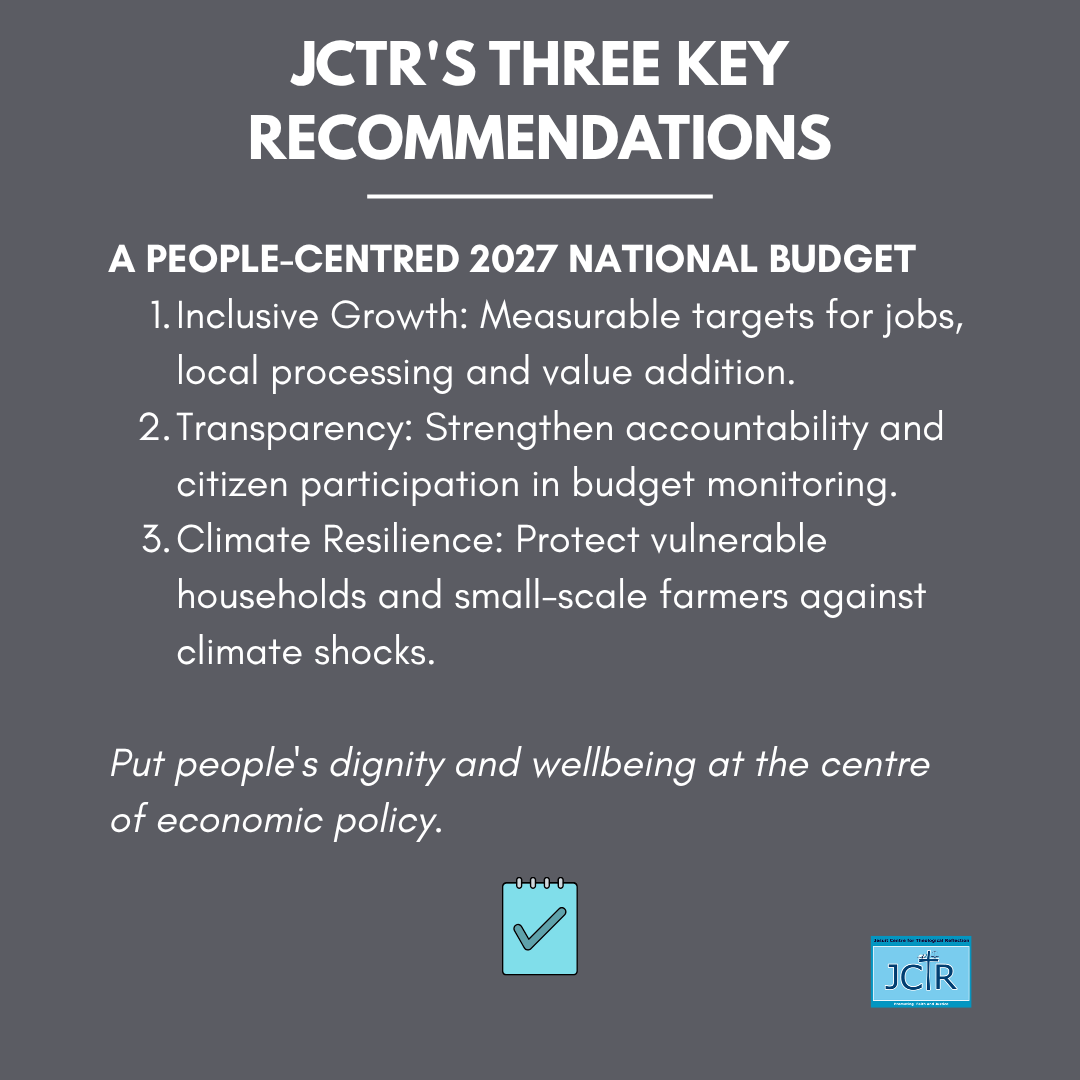
The Centre makes three key recommendations:
1. Establish clear targets and strengthen accountability for economic growth.
Government should complement sector growth targets with measurable annual targets and reporting requirements for local processing, employment creation and domestic value retention, particularly in mining, agriculture and manufacturing.
2. Strengthen transparency and meaningful citizen participation.
Budgetary allocations must translate into tangible improvements in people's living conditions. JCTR calls for transparent implementation, stronger monitoring mechanisms, regular reporting and meaningful opportunities for citizens to participate in monitoring public expenditure.
3. Strengthen preparedness and responses to climate-related shocks.
Government should ensure that climate resilience measures and support reach vulnerable households and small-scale farmers before climate-related shocks result in food insecurity. This includes strengthening community-level response mechanisms and integrating social protection programmes with disaster response systems.
Putting people at the centre of economic policy
The October 2026 BNNB provides an important reminder that economic progress must ultimately be measured by its impact on people's everyday lives.
As Government implements the 2027 National Budget, the rising cost of basic needs must remain a central consideration. Increased investment in poverty reduction, social protection, food security and measures to address inequality will be essential to ensuring that economic gains translate into improved living conditions for all Zambians.
JCTR urges Government and other stakeholders to ensure that national economic and budgetary policies prioritise the dignity and wellbeing of all people.
For the complete findings, district-by-district comparisons, analysis of the 2027 National Budget and JCTR's recommendations, access the full October 2026 Basic Needs and Nutrition Basket Statement below.
About the BNNB
The Basic Needs and Nutrition Basket is a monthly monitoring tool developed by the Jesuit Centre for Theological Reflection (JCTR) to assess the cost of essential goods and services required by a family of five to meet its basic needs. It provides an important reference point for understanding the cost of living and informing public policy discussions on poverty, inequality and household welfare.
For further information, contact the Social and Economic Development (SED) Programme at JCTR:
Telephone: 0955 290 410
Email: info@jctr.org.zm | admin@jctr.org.zm
Website: www.jctr.org.zm

"A just Zambian society guided by faith, where everyone enjoys the fullness of life".