

Wednesday, July 1, Lusaka, Zambia
The Jesuit Centre for Theological Reflection (JCTR) Basic Needs and Nutrition Basket (BNNB) for a family of five in Lusaka stood at ZMW 12,112.88 in June 2026 from ZMW 11,763.38 in June 2025. The annual increase of ZMW 349.50 shows that the cost of meeting basic needs remains high and continues to place a significant strain on household budgets, underscoring the persistent cost-of-living pressures facing many Zambian families.
In 2026, the BNNB has increased by ZMW 747.88 from January (ZMW 11,365.00) to June (ZMW 12,112.88). This trajectory in the cost of living unfolded against a backdrop of broader macroeconomic improvements. The annual inflation rate eased from 11.2% in December 2025 to 6.5% in June 2026. The period was marked by the appreciation of the Kwacha against major currencies, reported continued progress in restructuring Zambia’s external debt and improved output in the agricultural sector. Yet, improvements in the macroeconomic environment have not reflected at the household level. The divergence between improving macroeconomic indicators and the BNNB that rose by ZMW 747.88 over the same six months illustrates how aggregate economic gains can mask deepening hardships for low-income households, particularly where the cost drivers, such as charcoal, fall outside the basket of goods most responsive to improvements in macroeconomic fundamentals.
Key Findings from January to June 2026
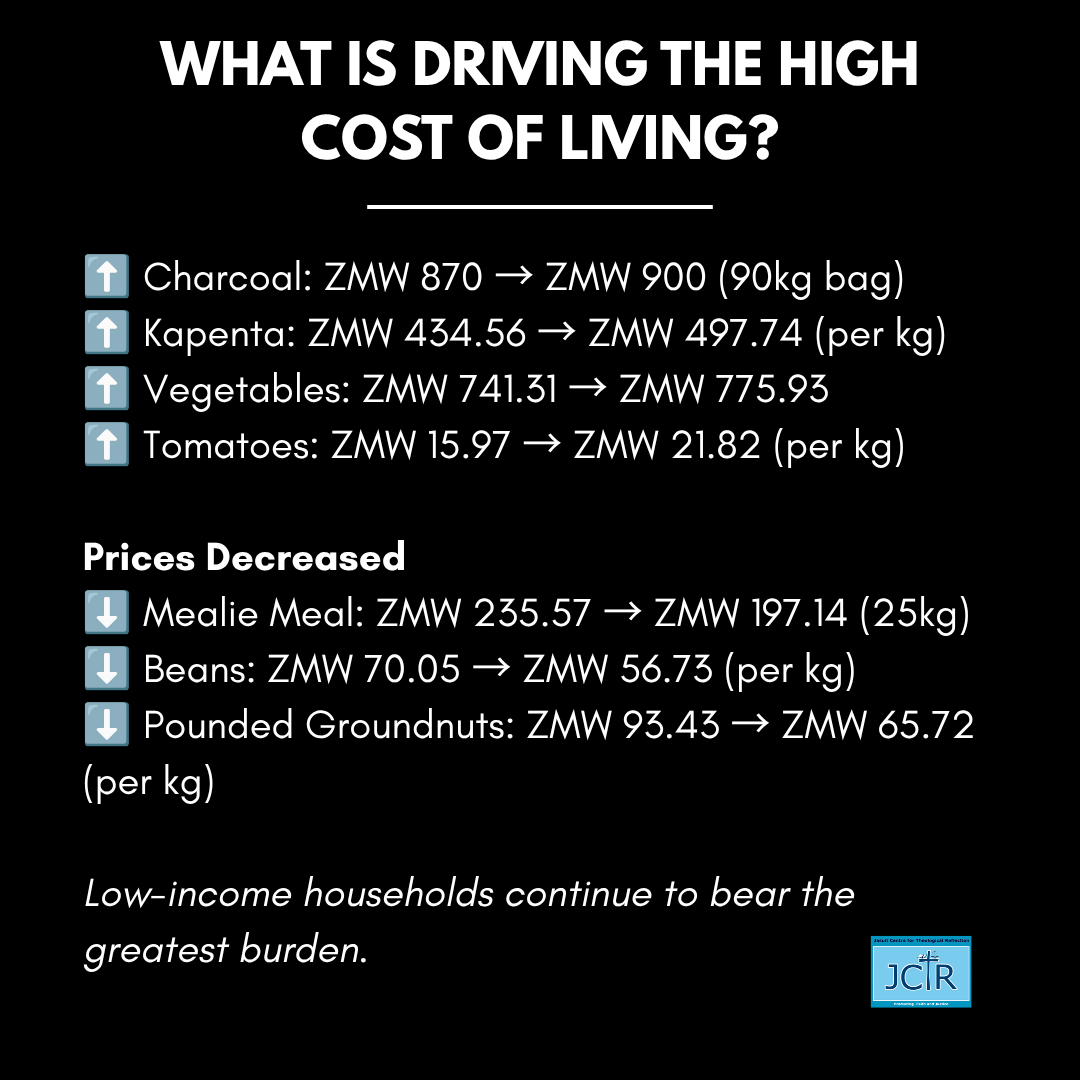
During the month of June 2026, the cost of some food items continued to record increases compared to May 2026. For example, the price of kapenta increased from ZMW 434.56 to ZMW 497.74 per kg, vegetables rose from ZMW 741.31 to ZMW 775.93, and tomatoes increased from ZMW 15.97 to ZMW 21.82 per kg. Similarly, the cost of essential non-food items has risen from ZMW 7,050.15 in May to ZMW 7,119.61 in June, driven mainly by a further increase in the price of charcoal, from ZMW 870.00 to ZMW 900.00 per 90kg bag. On the other hand, there was a decline in the cost of essential food items. For example, as the price of mealie meal fell from ZMW 235.57 to ZMW 197.14 per 25kg bag, while beans dropped from ZMW 70.05 to ZMW 56.73 per kg and pounded groundnuts fell from ZMW 93.43 to ZMW 65.72 per kg. Despite the marginal monthly overall drop from ZMW 12,160.54 in May to ZMW 12,112.88 June, the continued rise in charcoal and some food costs underscore the disproportionate burden placed on low-income households that rely heavily on charcoal for cooking and heating.
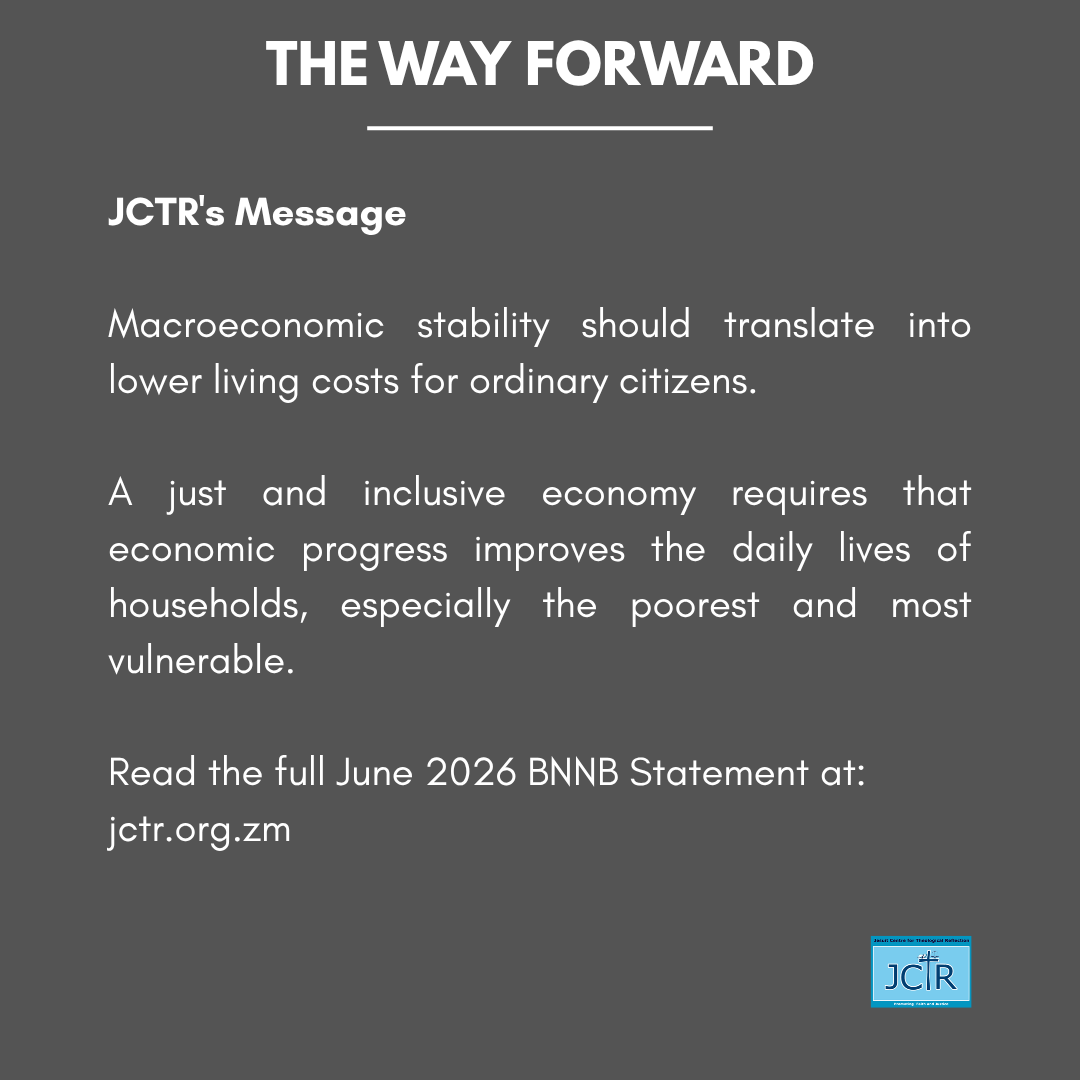
The persistent rise in the cost of living from January to June speaks directly to the principle of the preferential option for the poor. It is low-income households, who can least absorb additional costs and who depend most heavily on expensive items like charcoal as an energy source, that continue to bear the heaviest burden of Zambia’s high cost-of-living. A just and inclusive economy, anchored in principles of solidarity and the common good, requires that reported macroeconomic stability translate into improvements in living conditions at household level.
Issued by: Lombe Michael Kasanda – Social & Economic Development Programme Officer
For further clarifications, contact the Social and Economic Development (SED) Programme at the Jesuit Centre for Theological Reflection (JCTR) on 0955290410, or email info@jctr.org.zm and admin@jctr.org.zm. Address: Martin Mwamba Road, Plot 3813, Olympia Park, Lusaka. Postal: P.O. Box 37774, Lusaka – Zambia.
“A JUST ZAMBIAN SOCIETY GUIDED BY FAITH, WHERE EVERYONE ENJOYS FULLNESS OF LIFE”



"A just Zambian society guided by faith, where everyone enjoys the fullness of life".