
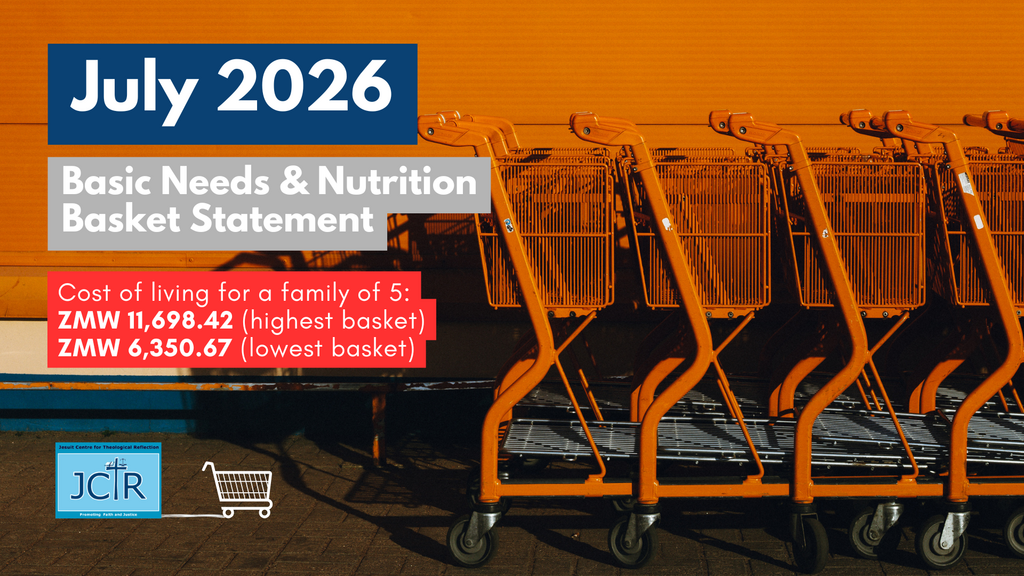
Lusaka, Zambia – The Jesuit Centre for Theological Reflection (JCTR) undertakes the Basic Needs and Nutrition Basket (BNNB) across 16 districts in Zambia with prices gathered from markets and retail outlets in Chinsali, Chipata, Choma, Kabwe, Kasama, Kitwe, Livingstone, Luanshya, Lusaka, Mansa, Mazabuka, Mongu, Monze, Mpika, Ndola and Solwezi. The findings affirm a key lesson from JCTR's Lusaka series: capturing the true cost of living in Zambia requires considering experiences across different cities and regions. The distance between the 16 districts is wider than most national conversations about affordability tend to assume.
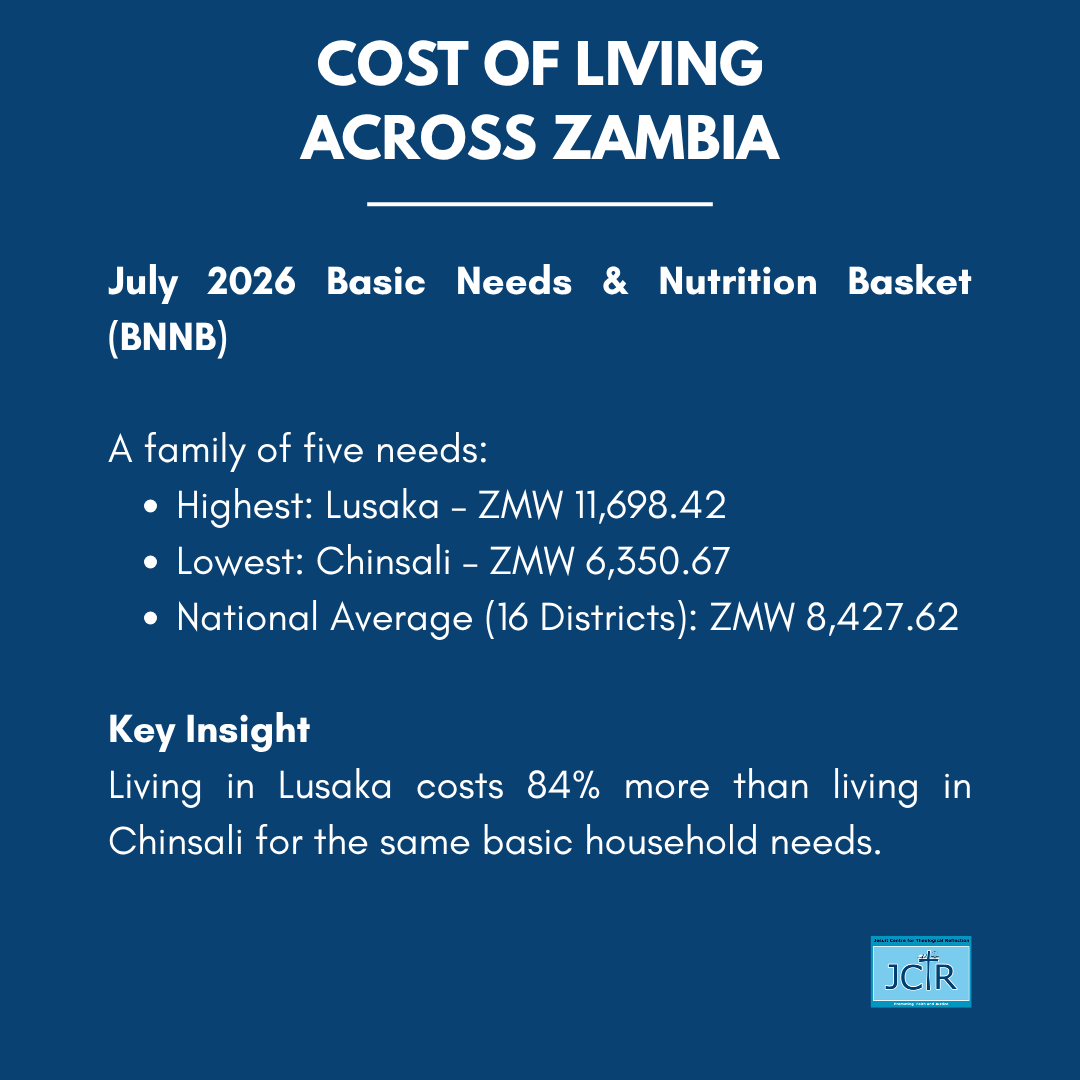
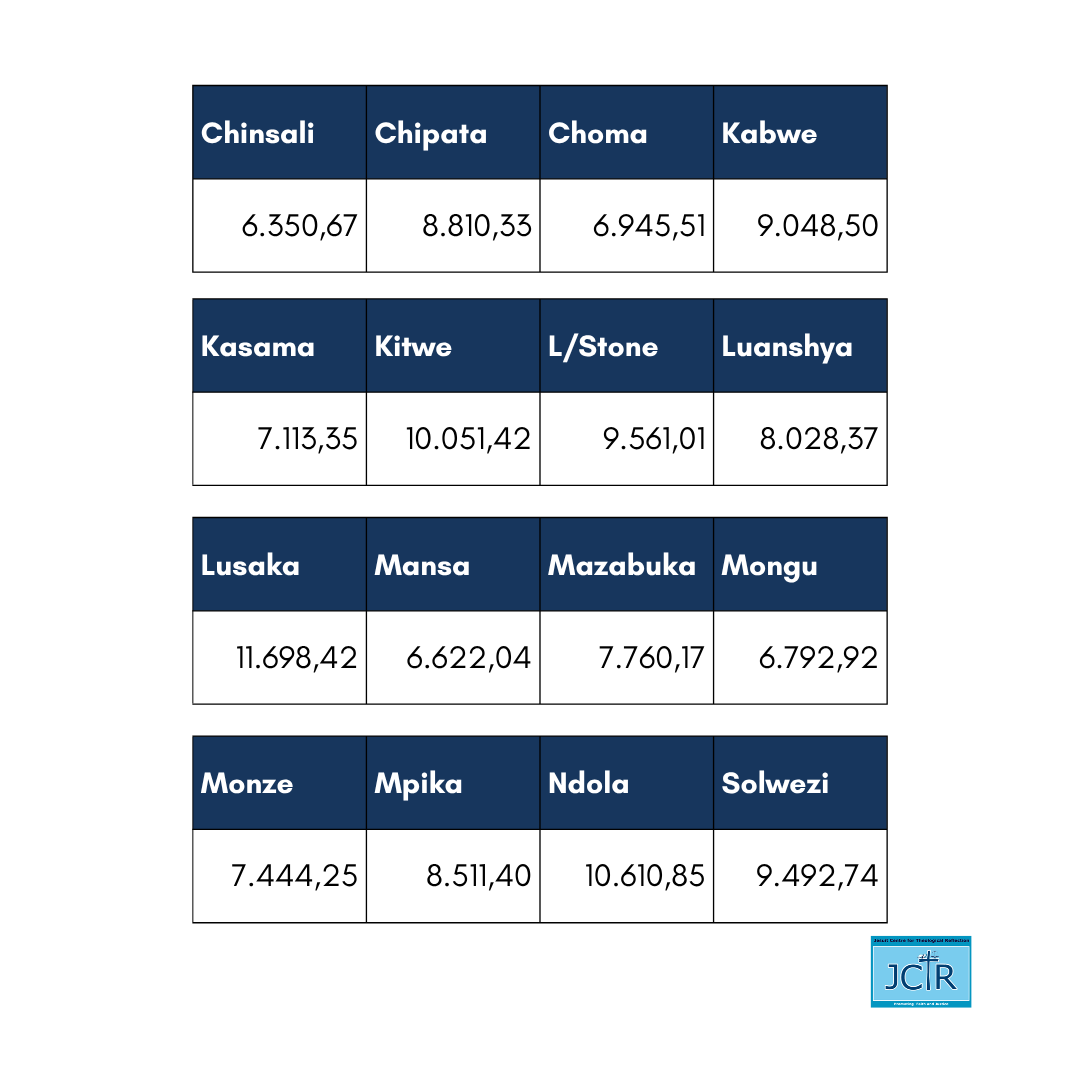
The average cost of the basic needs and nutrition basket across the 16 districts stood at ZMW 8, 427.62. Eight districts sat above that average – Mpika, Chipata, Kabwe, Solwezi, Livingstone, Kitwe, Ndola and Lusaka - and eight sat below it. The pattern is clear: the major urban, tourism and mining centres respectively. The ones below are the less developed or smaller provincial towns: Mongu, Kasama, Mansa, Choma, Monze, Mazabuka, Luanshya and Chinsali. The basket for a family of five ranged from ZMW 6,350.67 in Chinsali to ZMW 11,698.42 in Lusaka, a gap of ZMW 5,347.75. That means meeting the same basic needs costs 84% more in the capital than in Muchinga's provincial centre.
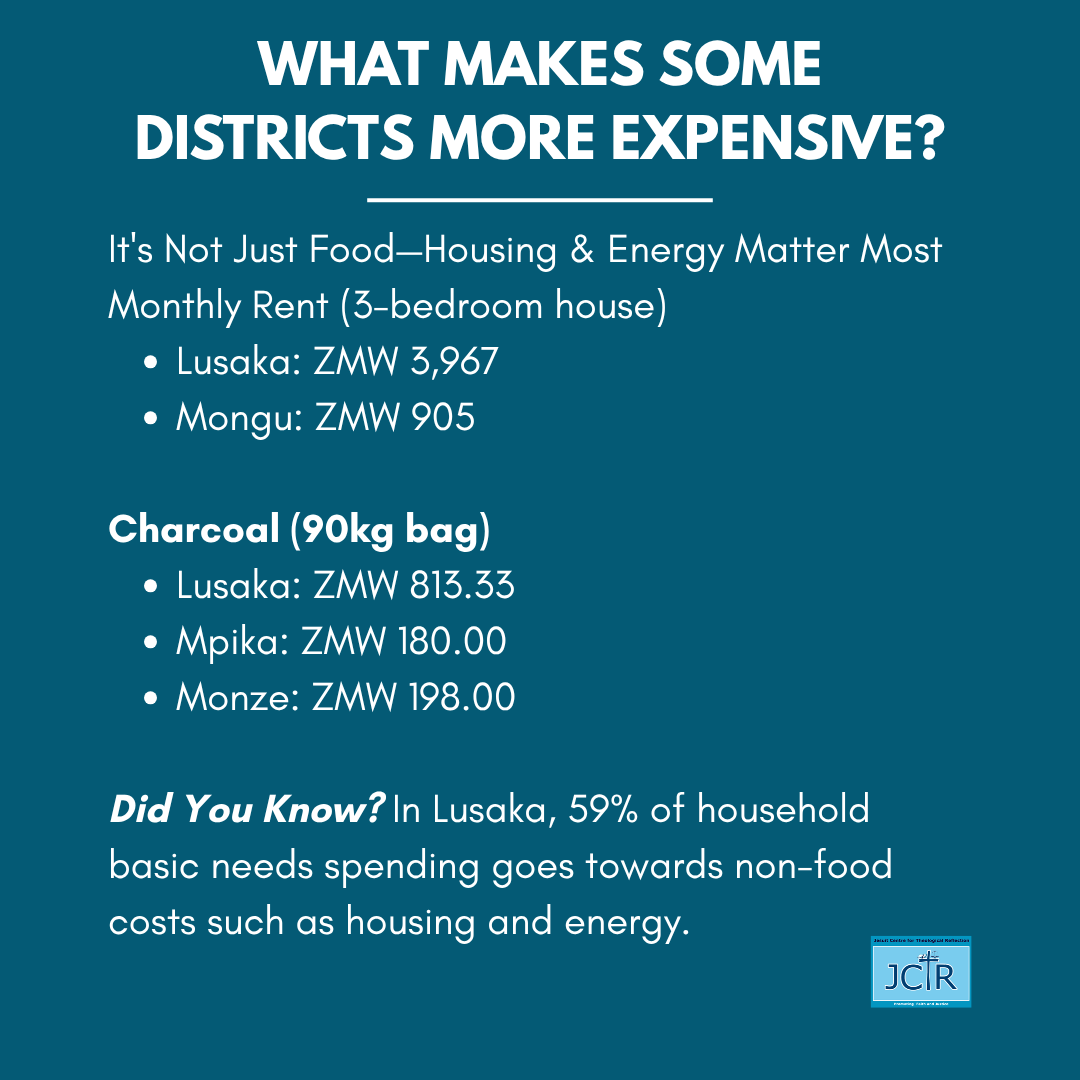
Food costs varied across districts, from ZMW 3,697.47 in Mansa to ZMW 6,073.70 in Livingstone. For example, mealie meal was most expensive in Solwezi at ZMW 270.17 per 25kg bag and cheapest in Mazabuka at ZMW 158.80, a difference that has more to do with local supply chains than with urban or rural status. What actually separates the expensive districts from the cheap ones is non-food cost: housing, electricity and charcoal. A three-bedroom house in Lusaka averaged ZMW 3,967 a month in July; the same house in Mongu averaged ZMW 905, a difference of more than four times. Charcoal, still the primary cooking fuel for most low-income households, costs an average of ZMW 813.33 per 90kg bag in Lusaka and ZMW 790.00 in Ndola, against ZMW 180.00 in Mpika and ZMW 198.00 in Monze. Put together, non-food items now account for 59% of the Lusaka basket, the highest share of any district surveyed, against roughly a third in Mongu (34%), Kasama (38%) and Chinsali (39%). Lusaka is not more expensive because families there eat more; rather, they pay several times over for a roof and energy source.
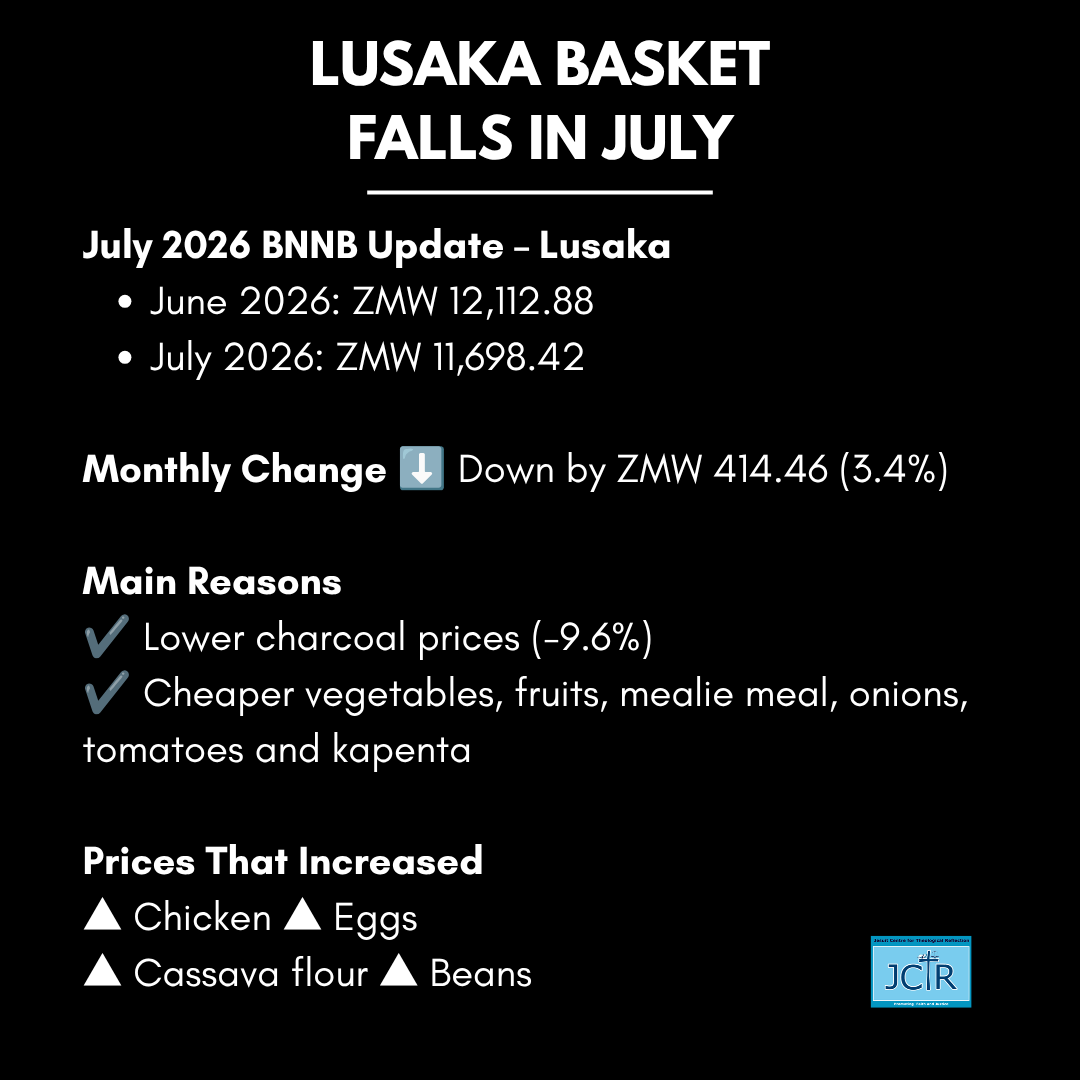
This month in Lusaka, the Basket stood at ZMW 11,698.42; the July basket is down ZMW 414.46 from the ZMW 12,112.88 recorded in June, a decline of about 3.4%. Charcoal alone accounts for nearly half of that: the price fell from ZMW 900.00 to ZMW 813.33 per 90kg bag, a drop of 9.6% that reversed May and June's increases and cut ZMW 173.33 off the monthly bill on its own, out of a total non-food saving of ZMW 193.55. The non-food easing came from smaller declines in wash soap, jelly and toilet paper. On the food side, the ZMW 220.91 fall was carried by fruit and vegetables, other fruits down 20.7%, vegetables down 11.5%, alongside kapenta, soya pieces, onions, tomatoes and mealie meal, all cheaper than in June. That was partly offset by chicken, up 18.3%, along with eggs, cassava flour and beans, all of which rose over the same month. Put simply: Lusaka's basket eased in July because charcoal and produce prices fell, not because rent or utilities did, and not because every commodity moved in the same direction.
According to the Zambia Statistical Agency (2026), Zambia’s annual inflation rate remained at 6.5% in July 2026, unchanged from June, indicating stability in the pace of price increases. Food inflation eased to 6.4% from 6.7%, while non-food inflation rose to 6.7% from 6.0%. A macroeconomic recovery that eases pressure on Lusaka's basket through cheaper charcoal and produce does not automatically ease it in Kitwe, Solwezi or Ndola, where housing and energy costs sit far closer to Lusaka's than to the national average, nor does it aid districts where the burden falls almost entirely on food, and where families remain exposed to whatever happens to maize, beans or vegetable prices in a given month, regardless of what happens to the Kwacha or to charcoal supply in the capital.
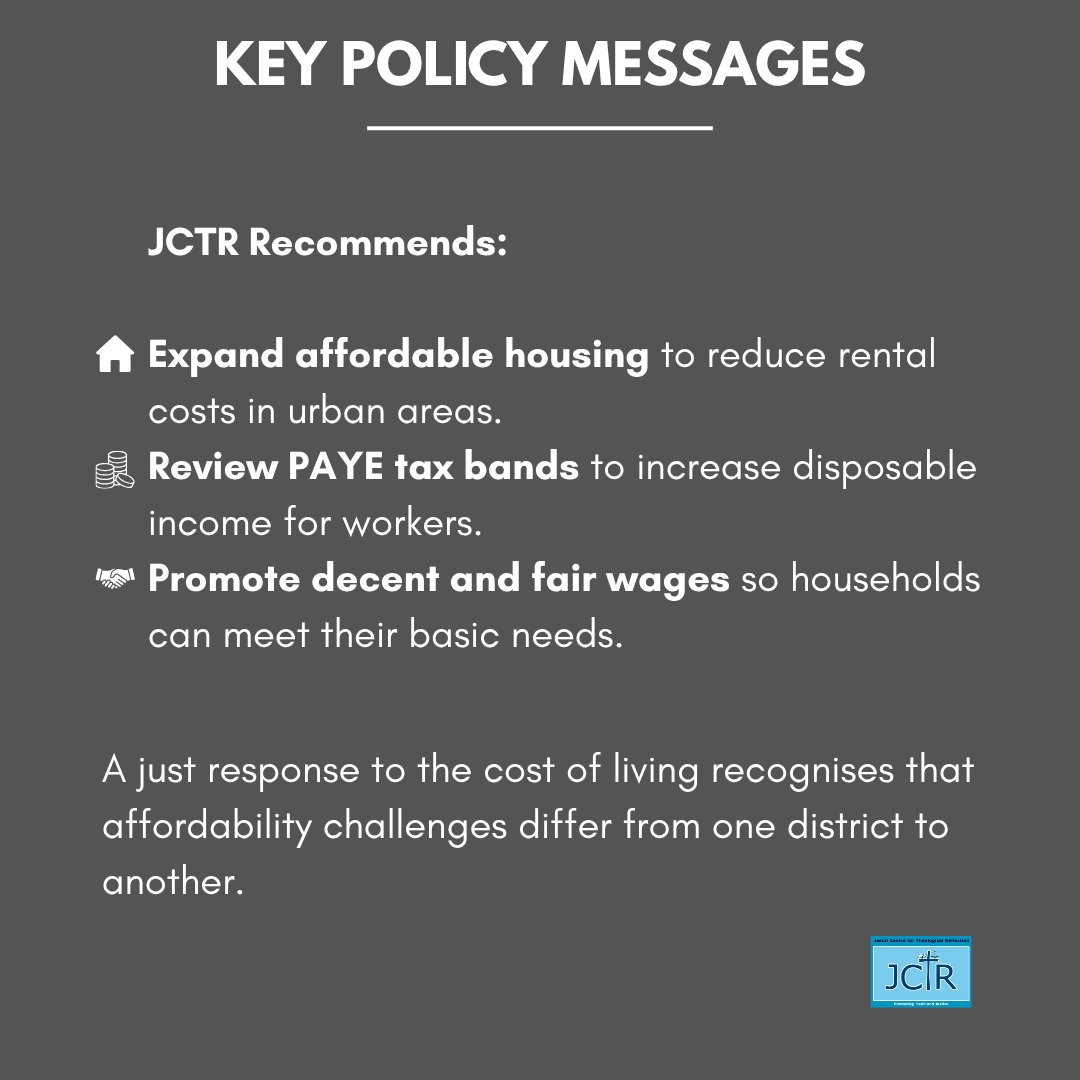
This has a direct bearing on how affordability gets used in policy. Programmes and transfers pegged to a single national cost-of-living figure, whether that is the minimum wage, social cash transfer values, or the cost assumptions built into the Constituency Development Fund, risk being calibrated to a number that describes almost nobody's actual district. A preferential option for the poor, taken seriously, means designing support around where the burden genuinely falls rather than around a national average that a family in Chinsali or Mongu never experiences in practice.
Recommendations;
A COMPARISON OF COSTS (IN KWACHA) OF BASIC NEEDS ACROSS ZAMBIA


"A just Zambian society guided by faith, where everyone enjoys the fullness of life".