
SUNDAY, NOVEMBER 30, 2025
LUSAKA, ZAMBIA – The Jesuit Centre for Theological Reflection (JCTR) Basic Needs and Nutrition Basket (BNNB) for a family of five in Lusaka stood at ZMW 11,079.13 in November, rising from ZMW 10,834.80 in October. This increase was primarily attributed to the increase in the total cost of essential non-food items, which rose from ZMW 6,432.90 to ZMW 6,581.60. The cost of charcoal in this section rose from ZMW 553.33 to ZMW 633.33 for a 90kg bag due to the onset of the rainy season, which typically increases the cost of charcoal production through challenging transportation and drying processes, resulting in decreased supply and elevated market prices. This comes at a time when the country is experiencing the longest hours of loadshedding this year at stage 11 of load management which entails having 3 hours of electricity supply. For many households, particularly those lacking a consistent electricity supply, charcoal is still an essential energy source for cooking and heating, making such price hikes especially challenging to manage and raising concerns about the dignity of the human person for families struggling to meet basic needs.
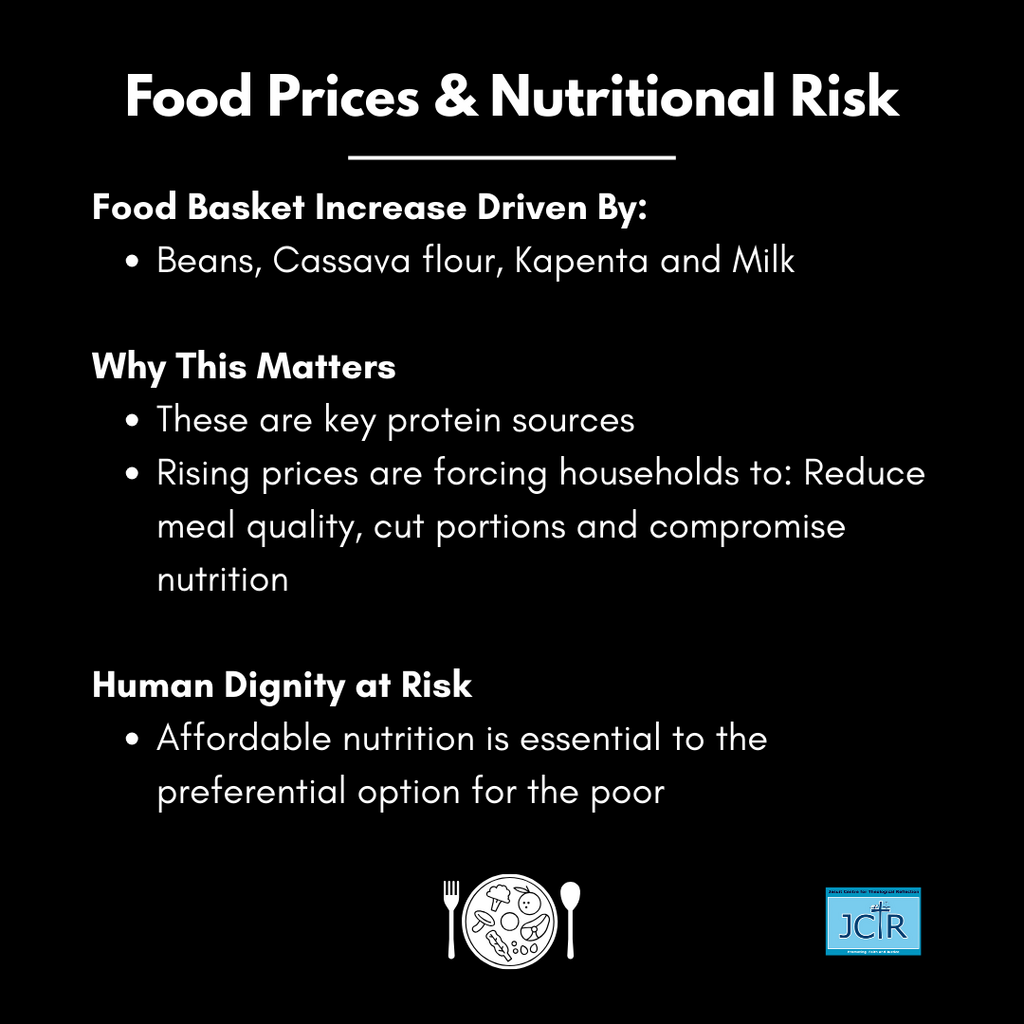
The cost of essential food items on the other hand rose from ZMW 4,401.90 to ZMW 4,497.53, driven by increased prices of selected food products like beans, cassava flour, kapenta, and milk. As most of these items are essential sources of proteins for many households, the escalating prices threaten to further compromise the nutritional value of meals, particularly for those who are already adjusting their consumption patterns due to economic constraints. Ensuring adequate access to nutritious food is central to upholding human dignity and responding to the preferential option for the poor, which calls society to prioritise the needs of vulnerable households.
Energy poverty in Zambia encompasses much more than just a lack of electricity access. While many rural homes remain unconnected, those that do have grid access, especially in urban and peri-urban regions, experience unreliable services characterized by outages, low voltage and frequent disruptions. This is further compounded by water scarcity due to a lack of electricity to power water pumps. This also affects sanitation as Zambia grapples with a cholera outbreak, which started on 5th August 2025. As of 24th November 2025, there were 578 cumulative cases and 9 deaths, with outbreaks in 13 districts. These challenges illustrate how energy access intersects with health, sanitation and well-being. They also highlight the principles of the common good and solidarity affirming that essential services must function in ways that safeguard community welfare.
Additionally, charcoal continues to be the primary cooking fuel largely due to the lack of affordability and inaccessibility of cleaner alternatives. As energy supply becomes increasingly unstable and viable options remain scarce, forcing households to struggle for consistent and affordable energy, this raises living costs and negatively impacts nutrition, health and general well-being. The November BNNB report illustrates how the increasing prices of charcoal worsen the financial difficulties faced by already vulnerable households, underscoring the need for solidarity with those most affected.
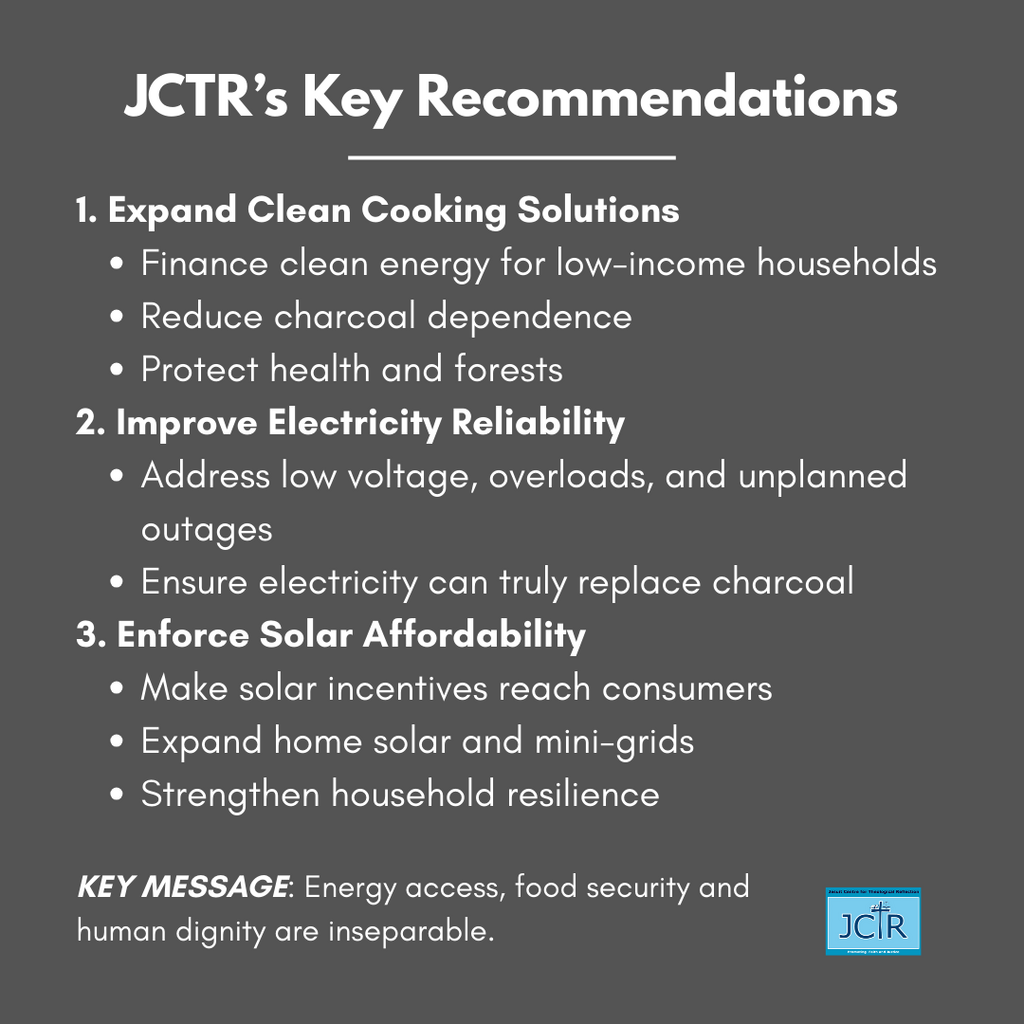
The Jesuit Centre for Theological Reflection therefore makes the following recommendations:
Energy poverty undermines human dignity by restricting families’ ability to live healthy, secure and productive lives, while heavy reliance on charcoal contributes to environmental degradation. Food and nutrition security, energy access and poverty reduction are inseparable pillars of a dignified life. The rising cost of the BNNB in November 2025 shows that many households remain under significant pressure, with energy challenges playing an increasingly central role in shaping the cost of living. JCTR continues to call for urgent, collaborative action to support livelihoods and foster a just society, consistent with solidarity and the option for the poor and marginalised.
Issued by: Ms. Lukwesa Musonda – Social and Economic Development Programme Officer
For further clarifications, contact the Social and Economic Development (SED) Programme at the Jesuit Centre for Theological Reflection (JCTR) on 0955290410, or email info@jctr.org.zm and admin@jctr.org.zm. Address: Martin Mwamba Road, Plot 3813, Olympia Park, Lusaka. Postal: P.O. Box 37774, Lusaka – Zambia.
November BNNB Snapshot



"A just Zambian society guided by faith, where everyone enjoys the fullness of life".