
Friday, June 5, 2026
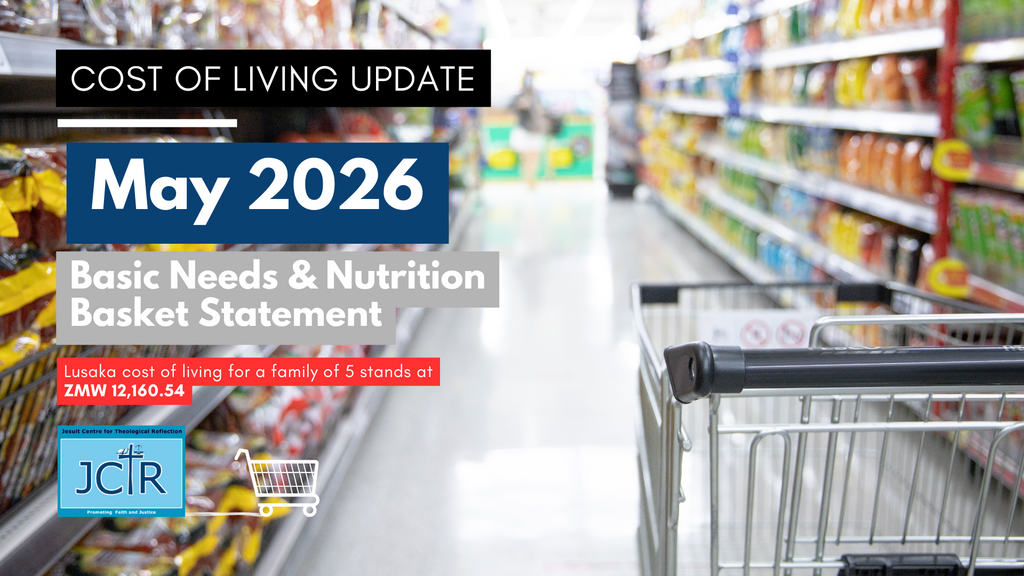
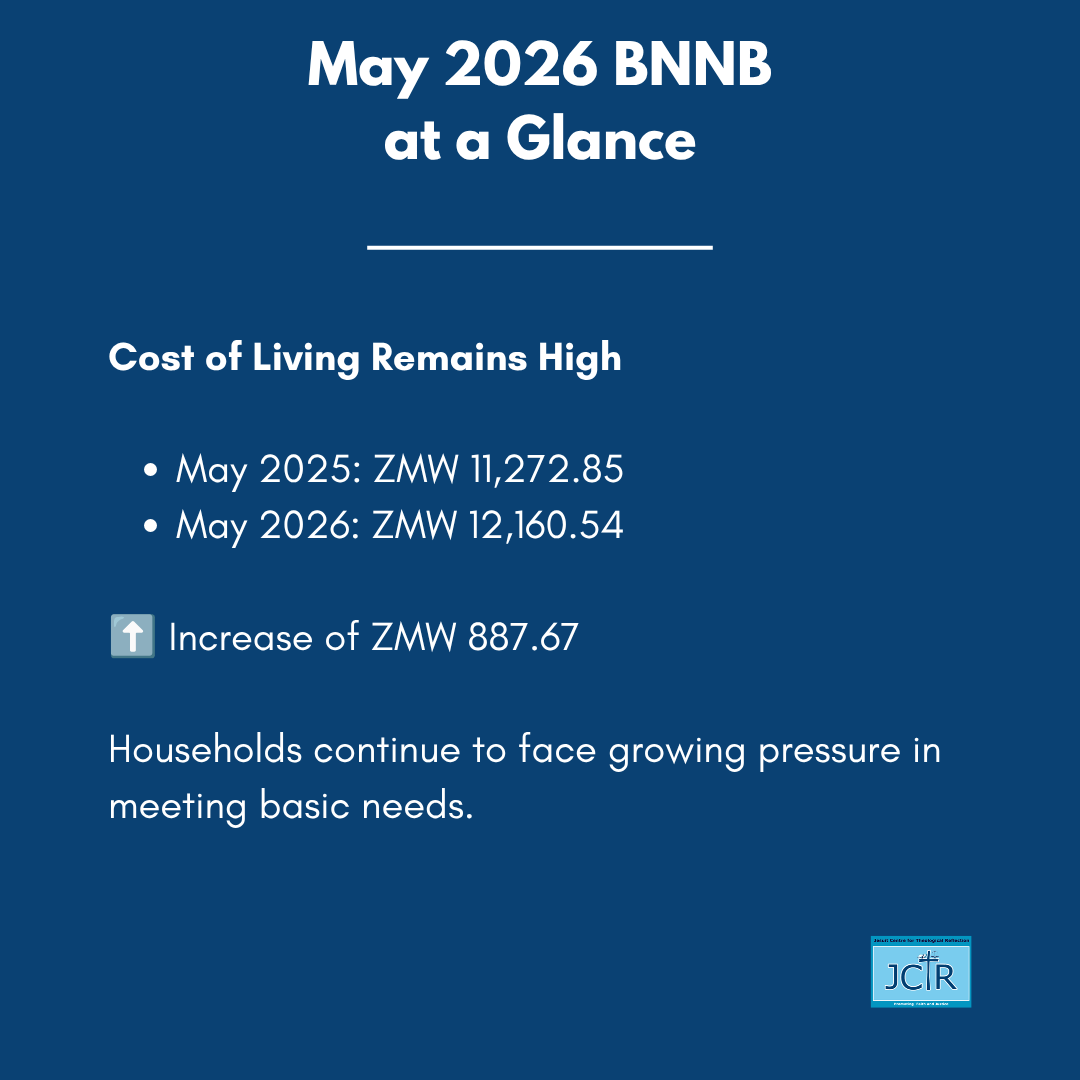
Lusaka, Zambia – The Jesuit Centre for Theological Reflection (JCTR) Basic Needs and Nutrition Basket (BNNB) for a family of five in Lusaka stood at ZMW 12, 160.54 in May 2026 from ZMW 11,272.85 in May 2025, marking an annual significant increase of ZMW 887.67. This underscores the cost-of-living pressures faced by many households, placing increasing strain on families and highlighting the urgent need for a people-centered approach to national planning and budgeting.
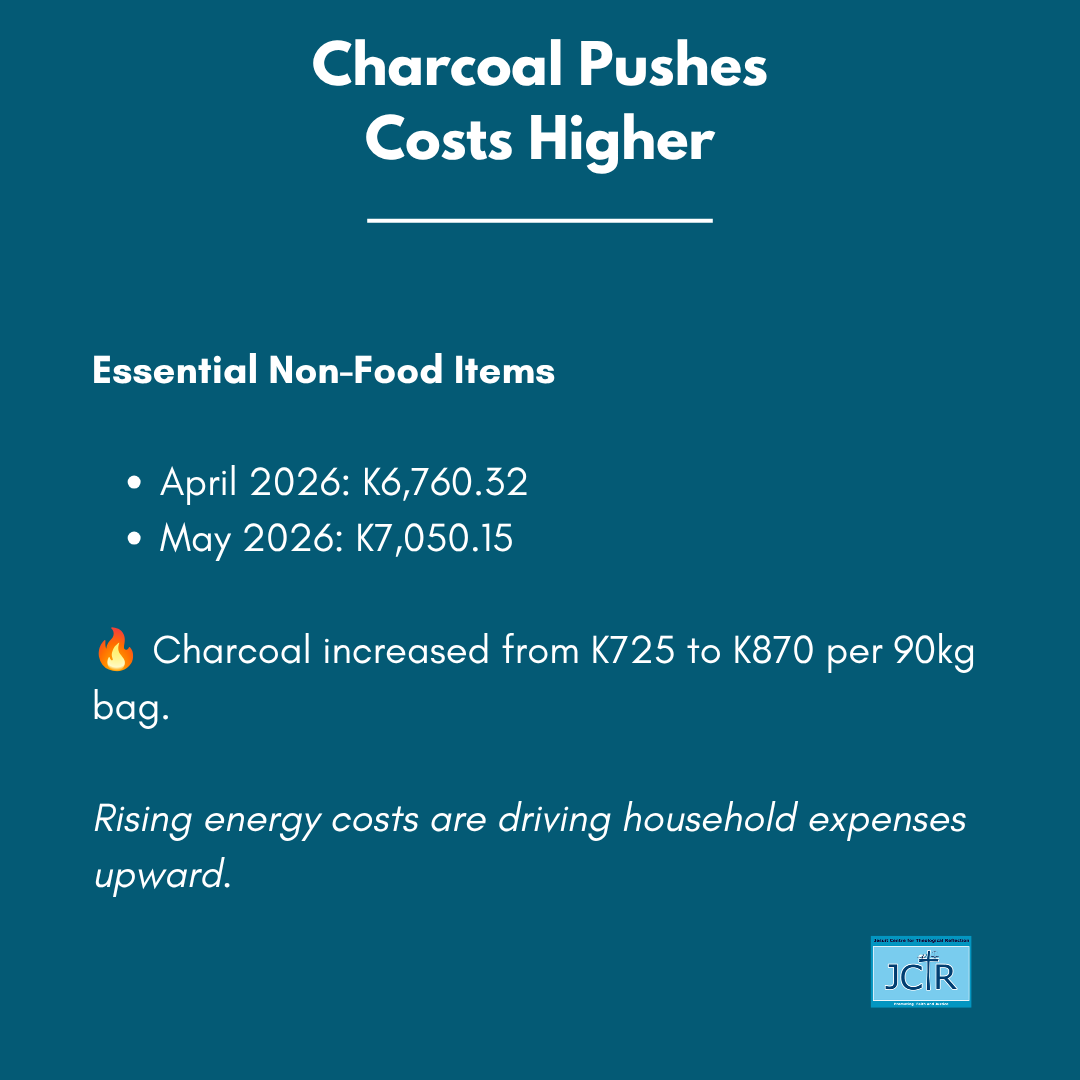
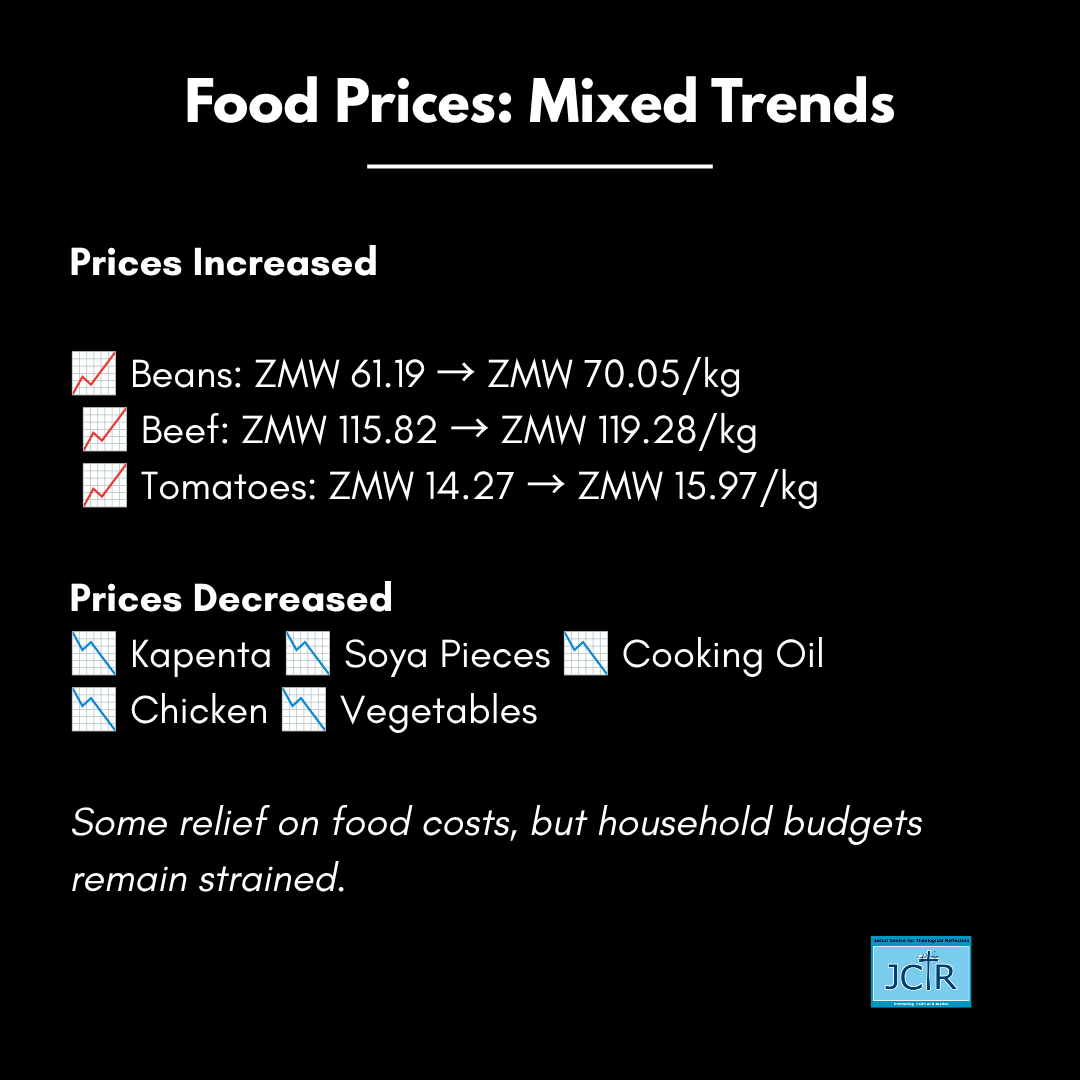
During the month of May, the total cost of essential non-food items increased significantly from ZMW 6,760.32 in April to ZMW 7,050.15 in May. This rise was mainly driven by a sharp increase in the price of charcoal, which went up from ZMW 725.00 to ZMW 870.00 per 90kg bag. In the essential food component of the basket, the cost of beans rose from ZMW 61.19 to ZMW 70.05 per kilogram, beef increased from ZMW 115.82 to ZMW 119.28 per kilogram and tomatoes rose from ZMW 14.27 to ZMW 15.97 per kilogram. The cost of some food items marginally decreased: kapenta from ZMW 495.91 to ZMW 434.56 per kilogram, soya pieces from ZMW 87.69 to ZMW 83.33 per kilogram, 2.5 litres of cooking oil from ZMW 134.21 to ZMW 126.00, chickens from ZMW 171.24 to ZMW 150.38 per 2kg and vegetables from ZMW 789.72 to ZMW 741.31. Despite the overall decline in food costs from ZMW 5,291.17 in April to ZMW 5,110.39 in May, the notable increase in essential non-food items and some food items continue to intensify the cost-of-living burden on households.
Given that the burden of high living costs falls disproportionately on the poor, undermining their dignity as access to adequate food, shelter, energy, healthcare, and other necessities become increasingly unattainable, the projected bumper harvest of 4.9 million metric tonnes presents a valuable opportunity for the government to respond to the cost-of-living crisis. By strengthening agricultural value chains through increased value addition and agro-processing, the government can stimulate job creation, boost farmers’ incomes, and ultimately enhance household livelihoods and economic resilience for ordinary Zambians.
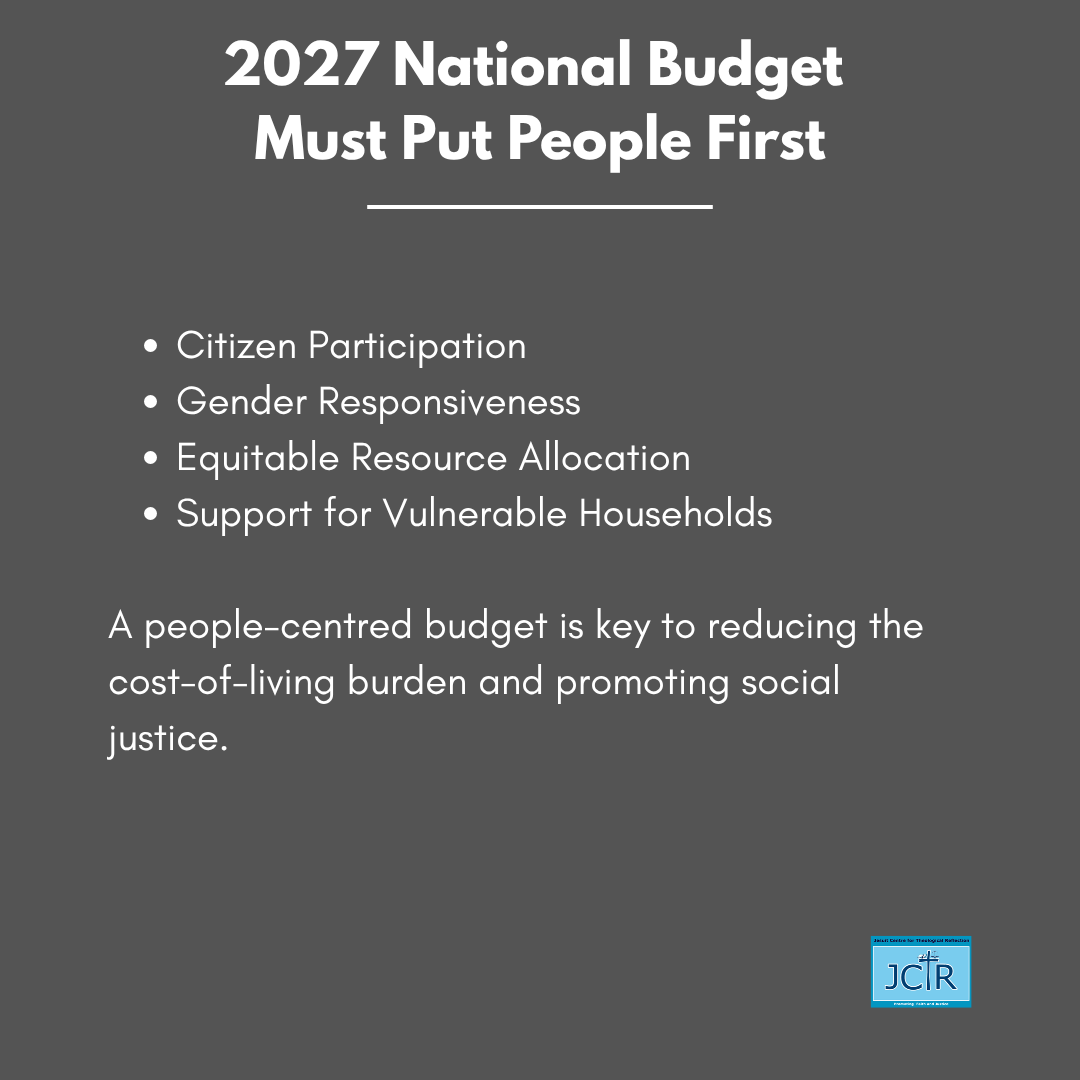
With the Ministry of Finance currently calling for proposals to inform the formulation of the 2027 National Budget, this moment presents a critical and time-bound opportunity for civil society, faith communities and all citizens to actively engage in the budget process, aligning proposals with key priority areas that respond to the needs of the people. Citizen participation in the budget process is not merely a democratic aspiration, but a critical requirement for responsive and effective public financial management. It is grounded in Zambia’s legal and constitutional framework and remains essential for ensuring that national resource allocation reflects the lived realities and priorities of ordinary citizens. Meaningful citizen participation enhances budget credibility, promotes efficiency in the allocation of resources, and strengthens accountability. It also provides an important pathway for advancing gender equity and social justice, ensuring that the voices of the poor and vulnerable are not excluded from decisions that directly affect their well-being and dignity.
Ensuring that the 2027 National Budget is gender responsive, equitable, and anchored in the lived realities of ordinary Zambians is essential to building a resilient nation where all people can live in dignity. Addressing the structural drivers of the cost-of-living crisis through a responsive and inclusive national Budget is not only a matter of social justice, but also a fundamental requirement for sound public financial management and sustainable national development. Guided by Catholic Social Teaching it is imperative that fiscal policy places people at the center of decision-making. In doing so, the Budget becomes not merely a financial instrument, but a moral and developmental tool for fostering inclusive growth, reducing inequalities and promoting a just society where all can live in dignity.
Issued by: Bernard Mwaba – Communications & Digital Engagement Officer
For further clarifications, contact the Social and Economic Development (SED) Programme at the Jesuit Centre for Theological Reflection (JCTR) on 0955290410, or email info@jctr.org.zm and admin@jctr.org.zm. Address: Martin Mwamba Road, Plot 3813, Olympia Park, Lusaka. Postal: P.O. Box 37774, Lusaka – Zambia.
“A JUST ZAMBIAN SOCIETY GUIDED BY FAITH, WHERE EVERYONE ENJOYS FULLNESS OF LIFE”

"A just Zambian society guided by faith, where everyone enjoys the fullness of life".