
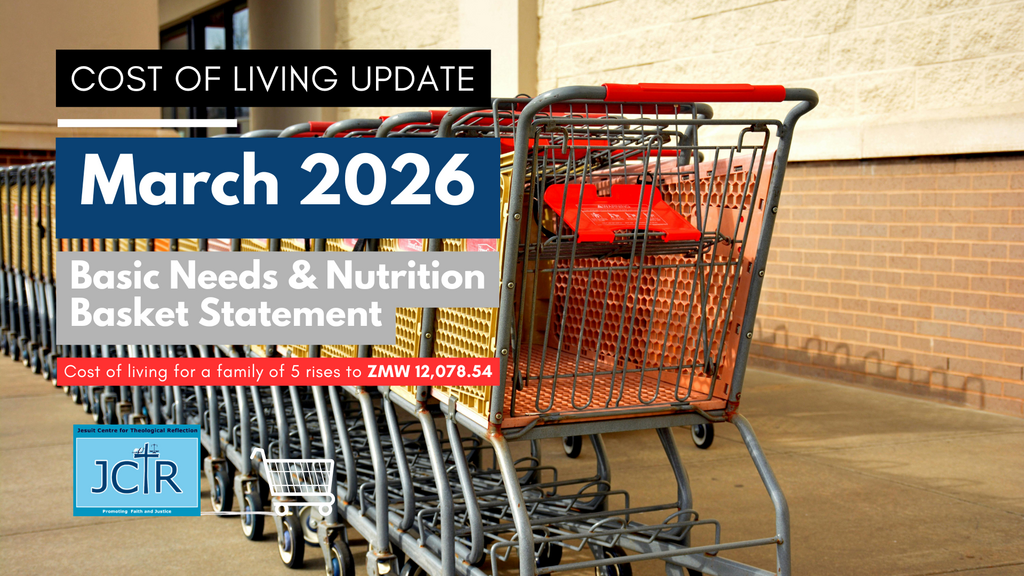
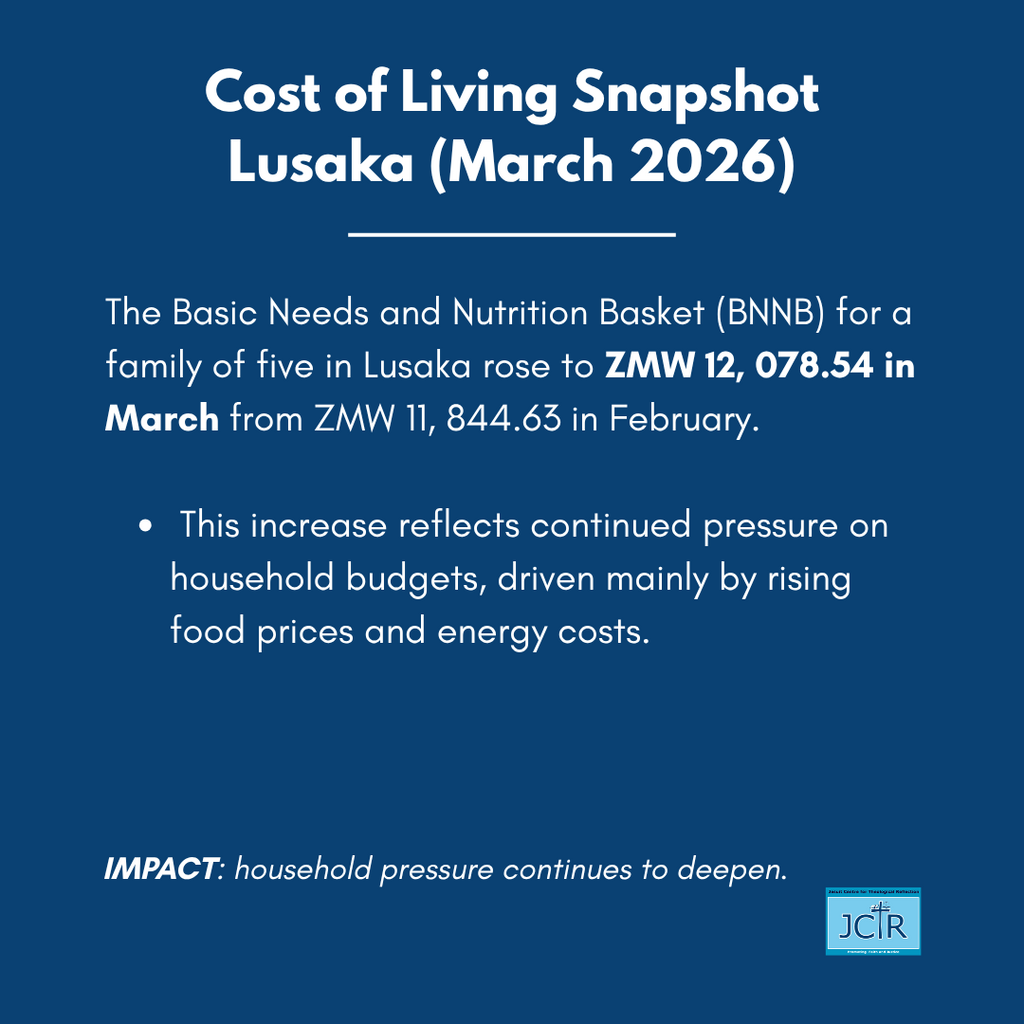
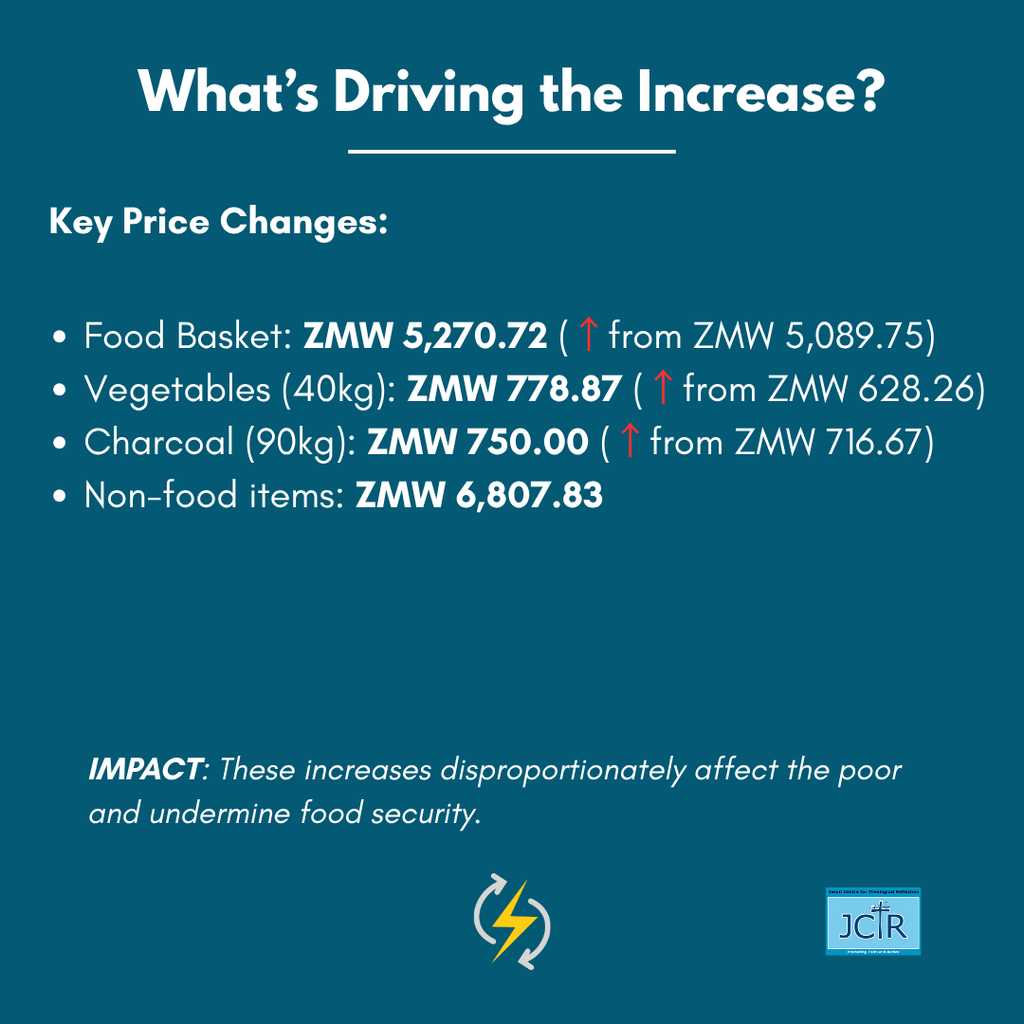
THURSDAY, APRIL 2, 2026, Lusaka - The Jesuit Centre for Theological Reflection (JCTR) Basic Needs and Nutrition Basket (BNNB) for a family of five in Lusaka increased to ZMW 12, 078.54 from ZMW 11, 844.63 in February. This rise was primarily driven by an increase in the cost of food items. The essential food items of the basket recorded a significant surge from ZMW 5,089.75 in February to ZMW 5,270.72 in March mainly driven by an increase in the price of vegetables from ZMW 628.26 to ZMW 778.87 for a 40kg bag. The total cost of essential non-food items marginally rose to ZMW 6,807.83 compared to ZMW 6,754.88 in February driven by an increase in the price of a 90 kg bag of charcoal from ZMW 716.67 to ZMW 750.00.
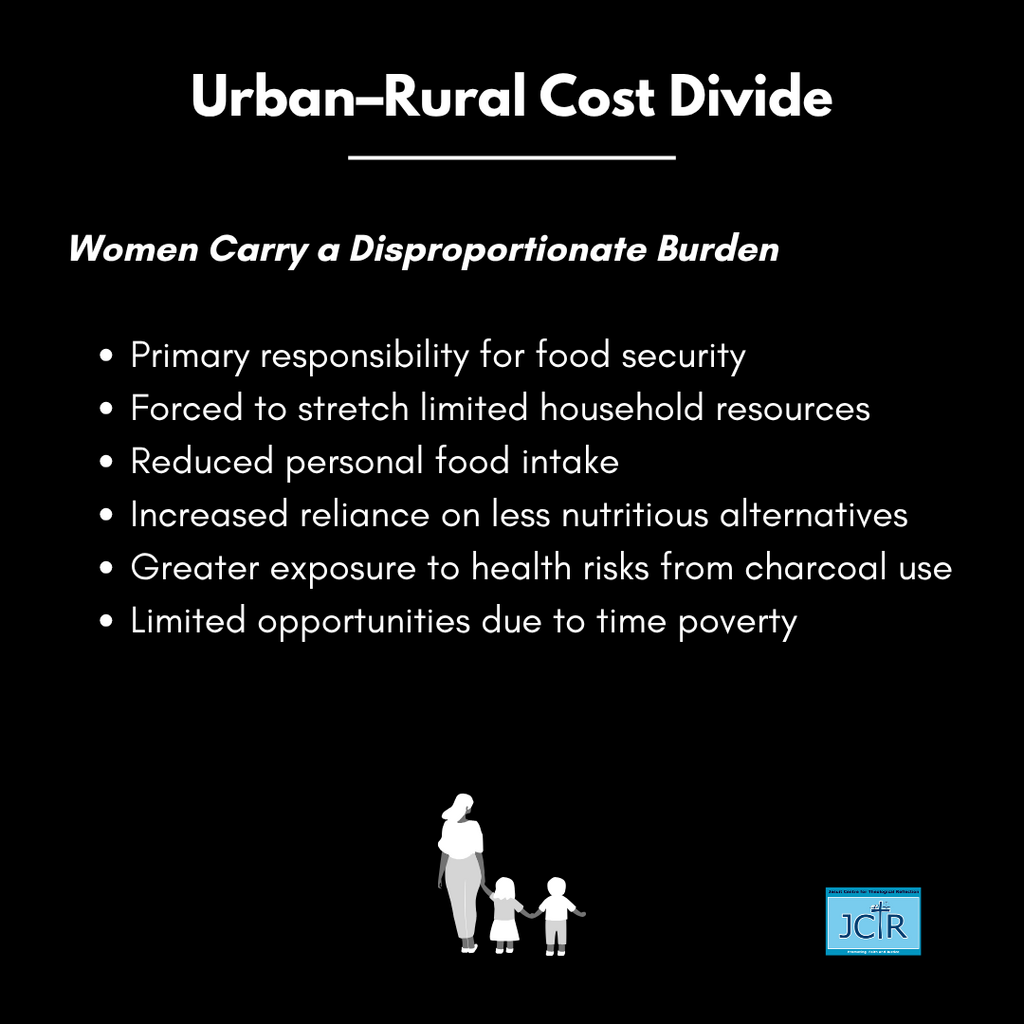
The high cost of living continues to exert pressure on households; however, this burden is not experienced equally. Women, who hold primary responsibility for ensuring food security in many households, face a disproportionate impact, particularly as the price of vegetables has risen to ZMW 778.87 for a 40kg bag, reducing access to essential, nutrient-rich foods. Furthermore, women often absorb economic shocks by stretching limited resources, adjusting meal composition, reducing their own food intake, or turning to cheaper but less nutritious alternatives. These pressures are compounded by persistent structural inequalities, including wage gaps, limited access to formal employment, and lower ownership of productive assets. As a result, many women are forced into coping mechanisms that compromise their health, safety, and overall wellbeing.
Energy-related cost increases are further amplifying this strain. The increase in charcoal prices to ZMW 750.00 for a 90kg bag not only raises household expenditure but also exposes women, who are primarily responsible for cooking and energy management, to heightened health risks associated with indoor air pollution. In addition, the increased cost and reliance on charcoal deepen the time poverty already experienced by women, limiting their opportunities for education, income generation and participation in public life.
The persistence of a high cost of living, even in the context of slowing inflation, highlights a critical concern, that is, the continued erosion of purchasing power. This is particularly severe for women in low-income and informal employment. Women are disproportionately concentrated in informal sectors where incomes are unstable, low-paying and largely excluded from social security systems. As prices rise faster than earnings, financial vulnerability worsens, reducing their ability to effectively support their households. These gendered economic pressures extend beyond the household and raise broader concerns of justice, equity, and inclusive national development.
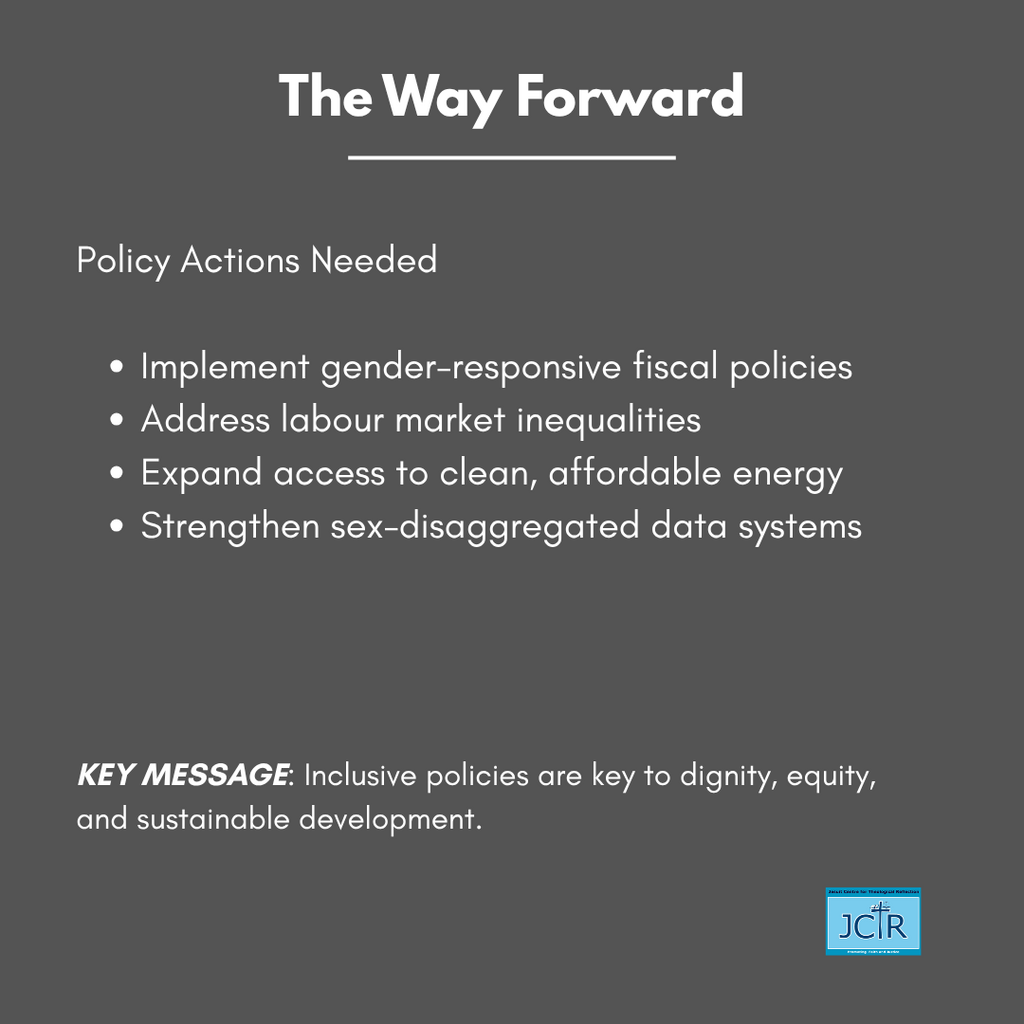
To safeguard household welfare and promote human dignity, the JCTR, therefore, makes the following recommendations and calls for the implementation of gender-responsive policy measures that directly address the unequal burden of the high cost of living;
Ensuring that policy responses are gender-responsive is vital to building a more inclusive and resilient Zambia, where all people can live with dignity and fullness of life. Advancing gender equality in income and across all spheres of life is not only a matter of social justice, but also a key driver of sustainable economic growth, poverty reduction, and broader social progress.
Issued by: Ms. Lukwesa Musonda - Acting Social & Economic Development Programme Manager
For further clarifications, contact the Social and Economic Development (SED) Programme at the Jesuit Centre for Theological Reflection (JCTR) on 0955290410, or email info@jctr.org.zm and admin@jctr.org.zm. Address: Martin Mwamba Road, Plot 3813, Olympia Park, Lusaka. Postal: P.O. Box 37774, Lusaka – Zambia.

"A just Zambian society guided by faith, where everyone enjoys the fullness of life".