

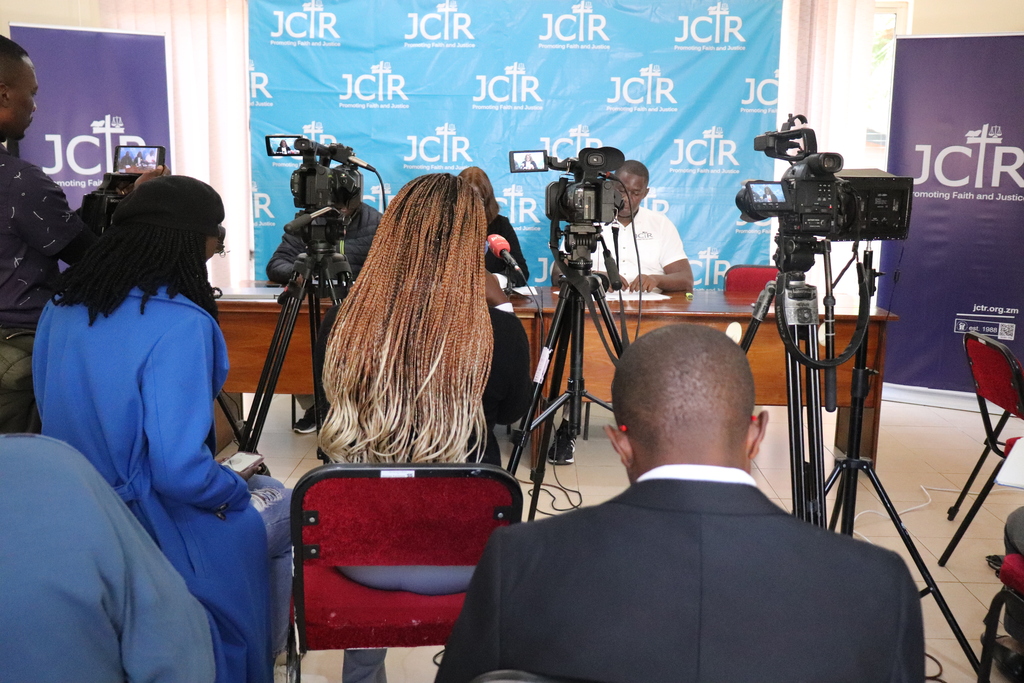

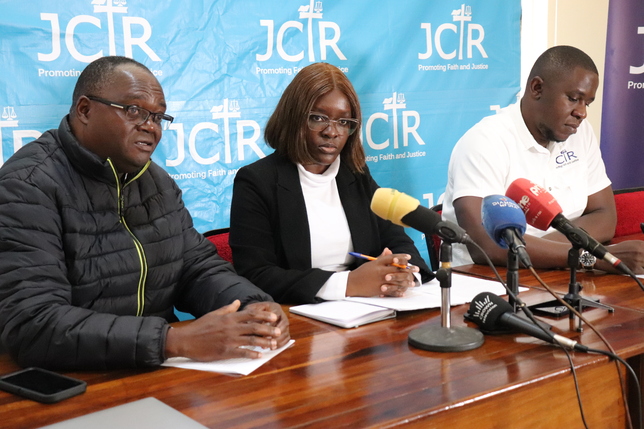
LUSAKA, ZAMBIA – The Jesuit Centre for Theological Reflection (JCTR) today released its half-year analysis of the Basic Needs and Nutrition Basket (BNNB) for Lusaka, revealing a continued struggle for families to meet basic needs amidst persistently high cost of living. This situation profoundly impacts human dignity, a cornerstone of a just society. The analysis, covering January to June 2025, underscores the urgent need for robust economic interventions to alleviate the burden on Zambian households, particularly those most vulnerable.
June 2025 BNNB Update
Comparing June 2025 BNNB to May 2025, the total basket saw an increase of ZMW 490.41. This rise was primarily driven by the non-food component, which increased by ZMW 452.04, whilst the food basket experienced a more modest increase of ZMW 36.38. Within food items, notable increases were observed in chicken, Kapenta, and tomatoes, whilst prices for Roller Mealie Meal, other fruits, and bananas saw decreases. The significant surge in non-food costs was largely attributable to charcoal, whose unit price dramatically rose. This increase in charcoal cost is influenced by both demand-side factors, such as increased consumption during the cold season, and supply-side factors, as many part-time charcoal producers, who are often farmers, abandon the trade to tend to their harvests given the recent favourable farming season.
Cost of the January to May 2025 BNNB in 16 Towns
The Basic Needs and Nutrition Basket (BNNB) data, covering 16 distinct towns across the country, tracks the monthly expenditure required for essential food and non-food items for a family of 5, offering a vital snapshot of household welfare from January to May 2025.
Our detailed analysis of the BNNB data from January to May 2025 reveals significant and varied dynamics in living costs. Lusaka consistently recorded the highest BNNB cost, peaking at ZMW 11,599.12 in February 2025, underscoring the persistent challenge of elevated living costs within the capital city. In contrast, Mongu consistently presented the most accessible costs, recording ZMW 5,889.32 in January 2025, whilst Chinsali largely remained around the ZMW 6,000 threshold, highlighting the comparative affordability in certain rural areas. Across all monitored towns, the overall average BNNB demonstrated a general upward trajectory from ZMW 8,075.76 in January to ZMW 8,634.00 in April, prior to a marginal moderation to ZMW 8,506.00 in May.
Beyond these aggregated figures, specific towns displayed notable fluctuations. Choma experienced a considerable increase in its BNNB, escalating from ZMW 6,419.43 in January to ZMW 8,039.87 in May, indicating a rapidly rising cost of living. Conversely, Chipata observed a notable decrease, from ZMW 8,926.15 in January to ZMW 7,771.71 in May. While towns such as Mpika and Luanshya demonstrated relative stability, others like Solwezi exhibited significant volatility, reaching ZMW 11,019.89 in May following a reduction in April.
Cost of the January to June 2025 BNNB in Lusaka
The estimated cost of the BNNB for a family of five (5) in Lusaka increased by ZMW 962.81 from January 2025 (ZMW 10,800.57) to June 2025 (ZMW 11,763.38). This increase is notably higher than the ZMW 886.92 increase recorded for the same period last year, when the BNNB rose from ZMW 9,555.53 in January 2024 to ZMW 10,442.45 in June 2024.
Key Findings from January to June 2025:
January 2025: The BNNB stood at ZMW 10,800.57.
February 2025: A significant increase was observed, with the BNNB rising to ZMW 11,599.12. This surge was largely attributed to price increases in commodities such as vegetables, fruits, and Kapenta.
March 2025: A slight reduction brought the BNNB to ZMW 11,546.87. While food items like Kapenta and vegetables saw decreases, essential non-food items, particularly charcoal, experienced a price increase due to seasonal factors impacting production and transportation.
April 2025: The BNNB saw a further reduction to ZMW 11,417.99, a decrease of ZMW 128.79 from March. This was influenced by reduced fruit prices and a drop in charcoal costs due to the transition from the rainy to the drier season, which improved supply and ease of movement from production sites.
May 2025: A marginal decrease of ZMW 145.02 was noted, with the BNNB at ZMW 11,272.97. This temporary relief was primarily due to seasonal gains, such as sweet potatoes replacing Irish potatoes as a more affordable option and decreases in the cost of vegetables and fruits.
June 2025: The cost of the BNNB for June surged to ZMW 11,763.38, marking an increase of ZMW 490.41 compared to May 2025. This increase was notably driven by a significant rise in charcoal prices, where the unit price of a 90kg bag increased by ZMW 226.34 from ZMW 510.33 in May to ZMW 736.67 in June, along with increased total costs for chicken and tomatoes.
The consistently high BNNB figures highlight that the cost of living remains beyond the reach of the majority of Zambians, especially when compared to the average formal sector earnings of ZMW 7,731 and the national average income of ZMW 5,369 in April 2025. This disproportionately burdens low-income households, underscoring the urgent call to prioritise the needs of the poor and vulnerable. While a recent bumper maize harvest and the appreciation of the Kwacha signal positive macroeconomic shifts, particularly in agricultural output and import costs, these benefits are not yet translating into widespread relief, as persistent high costs in non-food essentials such as housing and charcoal, coupled with enduring supply chain and distribution inefficiencies, continue to exert substantial pressure on household budgets.
Overall Inflation Trends (ZamStats Consumer Price Index):
Zambia's overall annual inflation rate registered 16.7% in January 2025, indicating that, on average, prices were 16.7% higher than in January 2024. By June 2025, this national rate had moderated to 14.1%, meaning the average price increase from June 2024 to June 2025 was 14.1%. For Lusaka Province, the annual inflation rate was 14.0% in January, moderating to 14.7% in June, reflecting a similar easing in price increases. This overall trend reflects a general slowing down in the rate of price increases during the first half of the year.
Despite the overall national slowdown in inflation, specific commodity movements highlight persistent challenges at the household level. ZamStats data for June 2025 showed national average decreases in staple food prices, with Breakfast Mealie Meal declining by 10.64% and Roller Mealie Meal by 9.19% from May to June. These declines align with the JCTR BNNB's observation of a decrease in Roller Mealie Meal prices for June. However, ZamStats also reported a 5.37% increase in the national average unit price of charcoal (50kg bag) from May to June. This upward movement in charcoal prices is consistent with the significant increase observed in the JCTR's Lusaka BNNB for the same period, confirming that high energy costs remain a notable pressure point for households, even amid broader inflationary deceleration.
Strategic Policy Recommendations:
Considering these findings, the JCTR urges policymakers to consider the following strategic interventions, guided by principles of human dignity, justice, and the common good:
The JCTR remains committed to advocating for a just Zambian society where everyone enjoys the fullness of life. We urge the Zambian Government to ensure that the 2026 National Budget truly reflects a preferential option for the poor, protects the dignity of all citizens, and promotes integral human development.

"A just Zambian society guided by faith, where everyone enjoys the fullness of life".