
Thursday, January 5, 2026
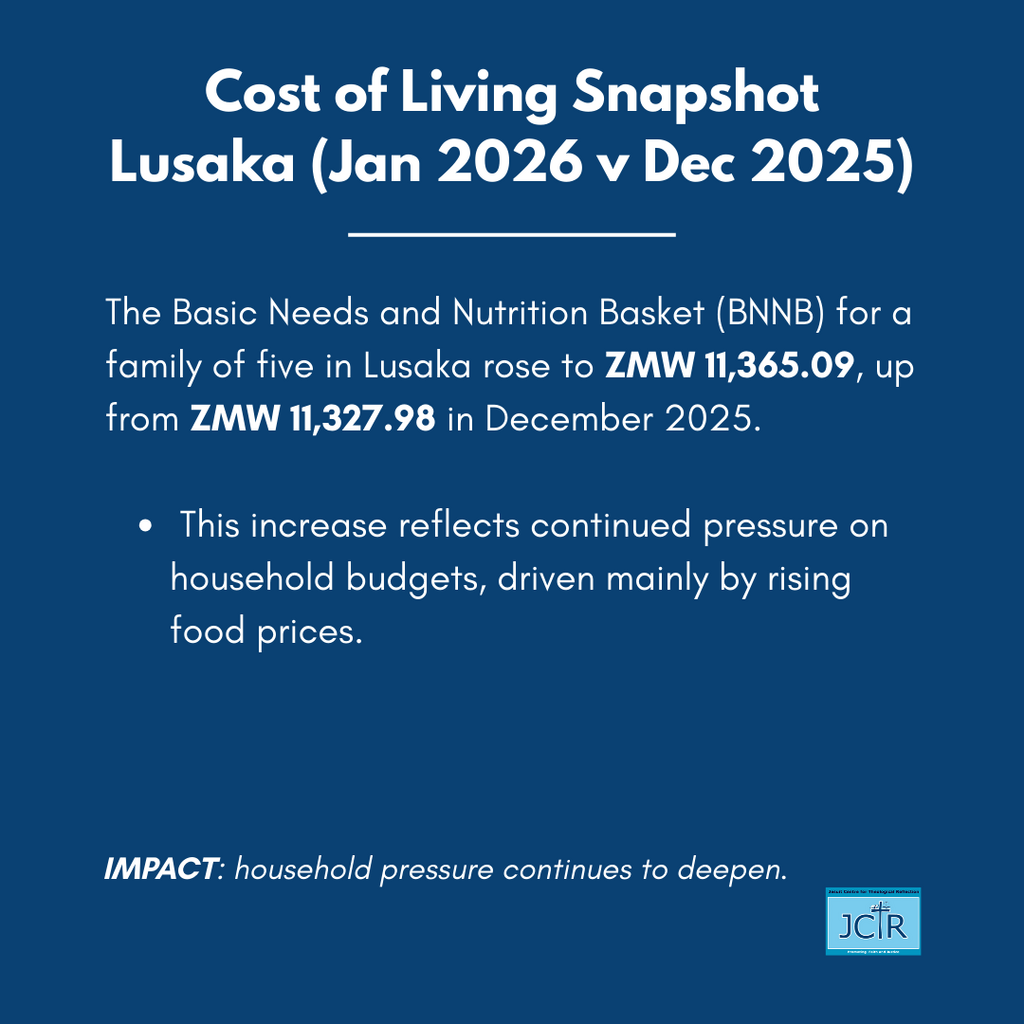
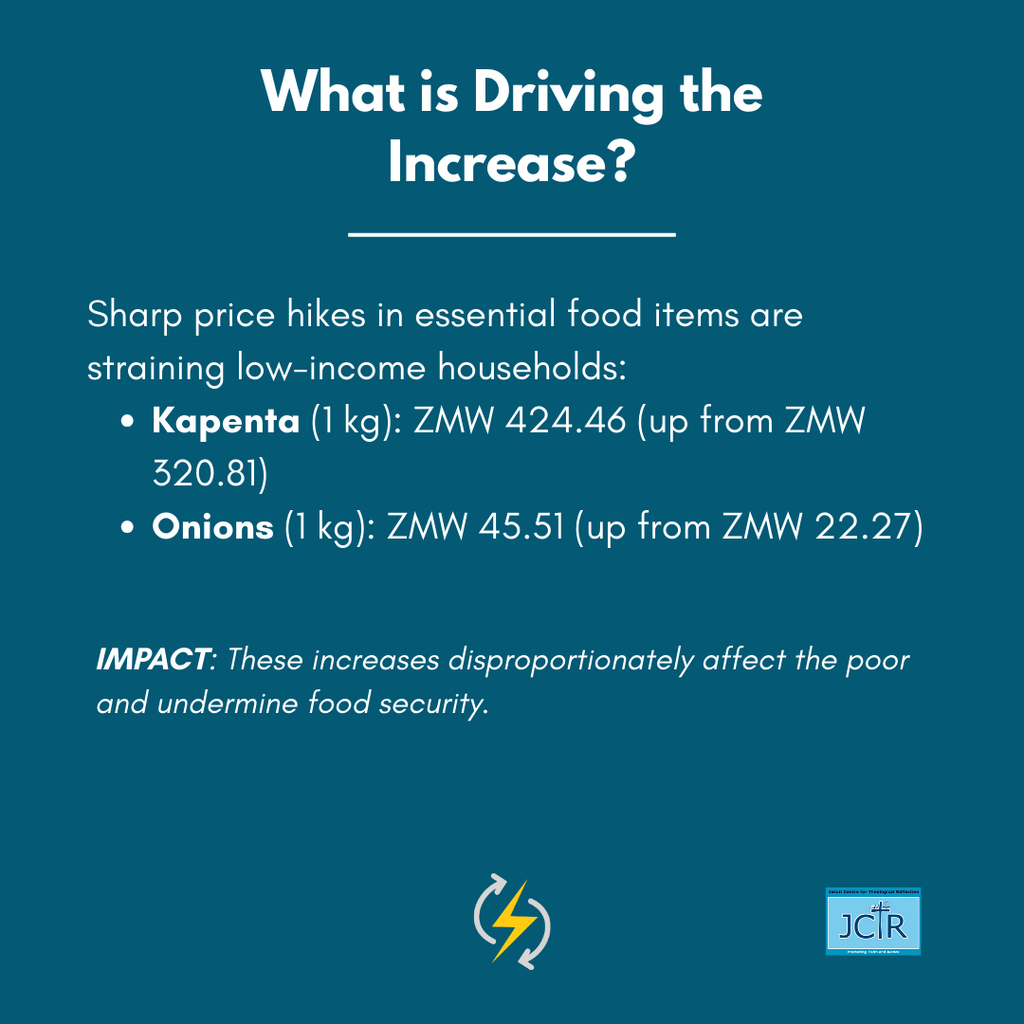
Lusaka, Zambia – The Jesuit Centre for Theological Reflection (JCTR) Basic Needs and Nutrition Basket (BNNB) for a family of five in Lusaka increased to ZMW 11,365.09 from ZMW 11,327.98 in December 2025. This rise was largely driven by sharp increases in the cost of essential food items: 1 kg of kapenta, rose to ZMW 424.46 from ZMW 320.81, and 1 kg of onions increased to ZMW 45.51 from ZMW 22.27. Such price increases disproportionately burden low-income households, underscoring the need for a deliberate option for the poor in economic and food pricing policies.
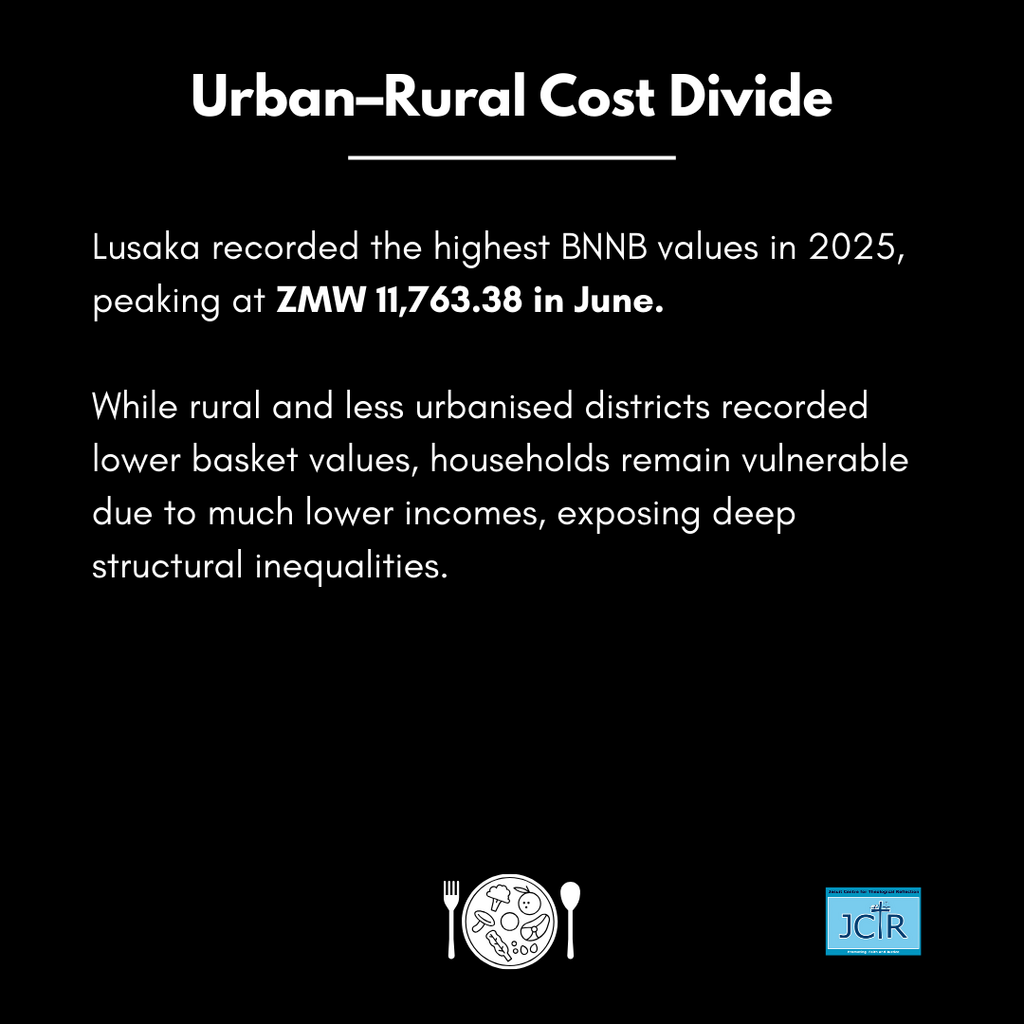
As 2026 began, JCTR reviewed key trends from the 2025 BNNB across selected districts. At the district level, Lusaka consistently recorded the highest basket values throughout the year compared to other districts. The Lusaka BNNB rose from ZMW 10,800.56 in January to a peak of ZMW 11,763.38 in June, before standing at ZMW 11,327.98 in December. These high basket values reflected the combined impact of elevated food prices, housing costs, transport, and energy expenses associated with urban living, conditions that continue to erode the dignity of households struggling to meet their basic needs.
Other urbanized districts such as Ndola, Kitwe, and Solwezi also recorded relatively high BNNB values during 2025, with monthly costs regularly exceeding ZMW 9,000 and approaching ZMW 10,000 at peak points. These districts experienced sustained upward pressure from both food and non-food components. In contrast, less urbanized districts recorded lower basket values; however, households in these areas remain highly vulnerable due to significantly lower income levels. For instance, Mongu’s BNNB ranged from approximately ZMW 5,889 to ZMW 6,705, Kasama from about ZMW 6,024 to ZMW 7,306, and Chinsali between ZMW 5,912 and ZMW 6,419. While these figures are lower than those in major urban centres, they remain high relative to prevailing incomes, pointing to deep structural inequalities that call for greater national solidarity.
In 2025, Zambia’s economy experienced relative macroeconomic stability and moderate growth. Despite the positive macroeconomic indicators, the cost of living remained persistently high. Many households, particularly the poor and marginalized, have yet to experience tangible relief. High food prices, energy costs, and transport expenses, combined with low income and production levels, continue to undermine household welfare, revealing a widening gap between macroeconomic progress and lived realities, as reflected in the BNNB reports.
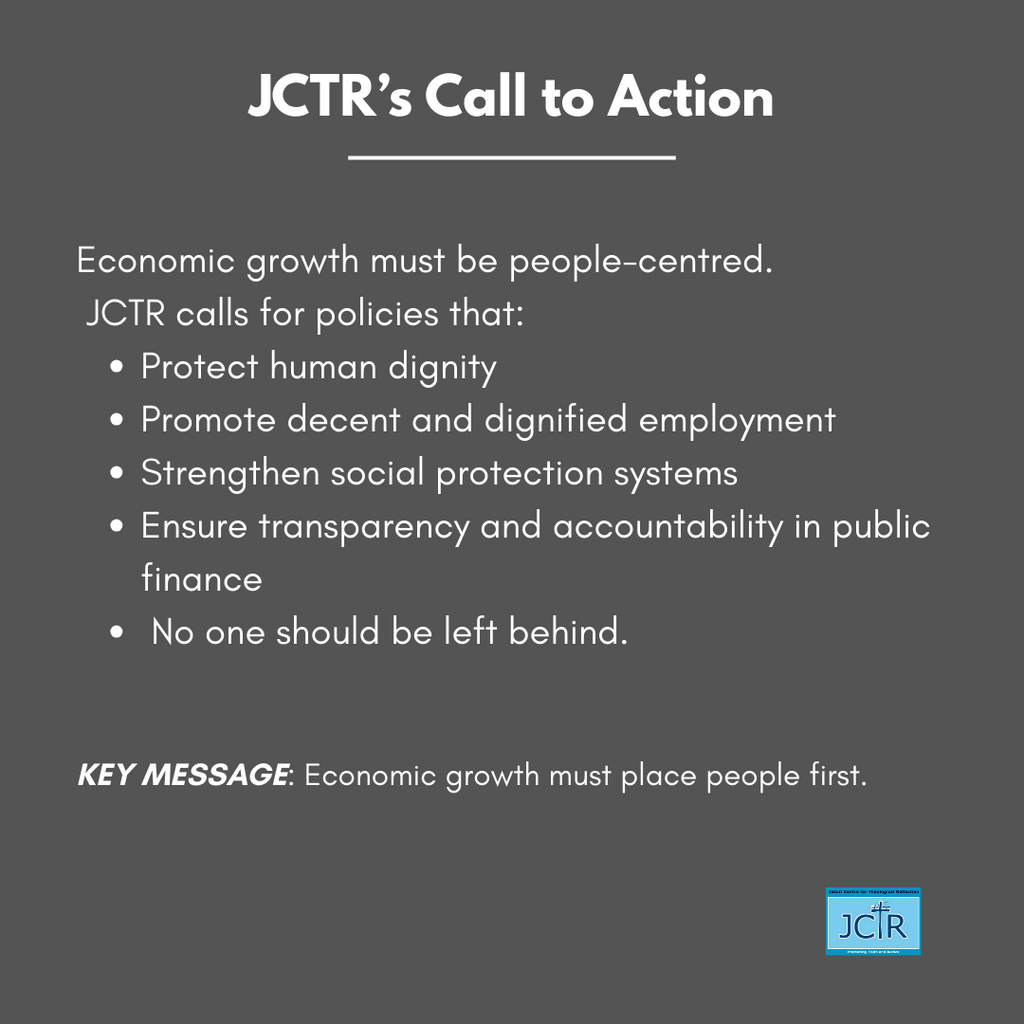
The Jesuit Centre for Theological Reflection therefore reiterates its call for people-centred policies that place human dignity at the core of development and economic decision-making. Economic growth that entrenches inequality and excludes large segments of the population cannot be considered genuine progress. JCTR urges the Government to prioritize investments that enhance productivity, create decent and dignified employment, and strengthen value chains across the economy. Equally critical is the need to sustain and improve social safety nets through effective targeting, transparency, and accountability in public finance management, in a spirit of solidarity with those most vulnerable and at risk of being left behind.
Issued by: Ms. Lukwesa Musonda – Acting Social and Economic Development Programme Manager
For further clarifications, contact the Social and Economic Development (SED) Programme at the Jesuit Centre for Theological Reflection (JCTR) on 0955290410, or email info@jctr.org.zm and admin@jctr.org.zm. Address: Martin Mwamba Road, Plot 3813, Olympia Park, Lusaka. Postal: P.O. Box 37774, Lusaka – Zambia.

"A just Zambian society guided by faith, where everyone enjoys the fullness of life".