
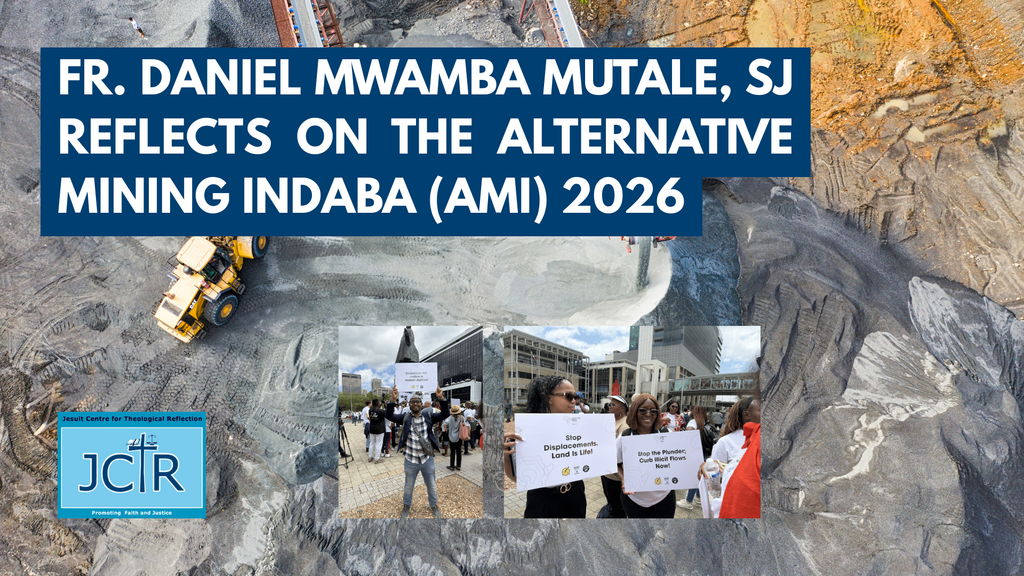
FEBRUARY 13, CAPE TOWN - The Alternative Mining Indaba (AMI) 2026 convened in Cape Town, South Africa, under a theme that called for renewed solidarity with mining-affected communities across Africa. Bringing together faith-based institutions, civil society actors, community representatives, and policy advocates, the gathering reaffirmed the critical role of district- and national-level AMIs in amplifying grassroots voices and strengthening advocacy for accountable and equitable mining governance.
Reflecting on the proceedings, Fr. Daniel Mwamba Mutale, SJ, Executive Director of the Jesuit Centre for Theological Reflection (JCTR), noted that the Declaration emerging from AMI 2026 offered both a sobering diagnosis and a hopeful call to action.
The Declaration warned that irresponsible mining practices continue to fuel environmental degradation, biodiversity loss, and social injustice. In many contexts, extractive activities undermine the dignity, livelihoods, and long-term wellbeing of communities.
Participants called on African governments to ensure that mining revenues are directed towards social services, public infrastructure, and a just energy transition. They further urged stronger cross-border cooperation to curb tax abuse and illicit financial flows, which deprive nations of resources essential for development. Central to these demands was the strict enforcement of environmental, fiscal, and social regulations rooted in climate justice, intergenerational equity, and respect for community dignity.
Investors and corporations were equally challenged to adopt ethical, human-centred business models grounded in transparency, meaningful community participation, and respect for human rights.
Fr. Mutale observed that the vision articulated at AMI 2026 resonates deeply with Catholic Social Teaching, from Rerum Novarum to Laudato Si’, and most recently Pope Leo XIV’s Dilex Te, which emphasises that Christian love must be expressed through social, economic, and ecological responsibility.
“At the heart of this conversation is the dignity of the human person,” he reflected. “Mining practices that displace communities, degrade ecosystems, or endanger workers contradict the fundamental principle that the economy must serve people, not the other way round.”
Echoing the social magisterium of the Church, Fr. Mutale highlighted the importance of solidarity and subsidiarity. Solidarity calls us to stand with those who suffer injustice, particularly marginalised and mining-affected communities. Subsidiarity affirms the right of local communities to participate meaningfully in decisions that affect their land, resources, and future.
Environmental stewardship, as emphasised in Laudato Si’, further reminds us that care for creation is inseparable from care for the poor. The exploitation of natural resources without regard for ecological limits or community wellbeing represents a failure of moral responsibility.
AMI 2026 reaffirmed the prophetic role of faith-based institutions and civil society in confronting injustice and strengthening networks of solidarity. For JCTR, this aligns with its ongoing commitment to promoting climate justice, ethical investment, fiscal justice, and responsible stewardship of natural resources.
“The wealth generated from Africa’s natural resources must serve the common good,” Fr. Mutale emphasised. “An economy rooted in dignity, justice, and hope is not optional—it is a moral imperative.”
As AMI 2026 concluded, its message was clear: alternative stories of mining are possible. Stories where communities are heard, ecosystems are protected, and natural wealth contributes to sustainable and inclusive development for present and future generations.
For JCTR, the journey continues—standing in solidarity with mining-affected communities and advocating for a just and humane extractive sector across the continent.

"A just Zambian society guided by faith, where everyone enjoys the fullness of life".