
In Zambia, the legal and policy framework protecting the rights of persons with disabilities (PwDs) is both comprehensive and progressive. Instruments such as the Persons with Disabilities Act No. 6 of 2012 and the country’s commitment to international conventions reflect a strong national commitment to inclusion. However, for many PwDs, the reality remains marked by barriers to services, limited representation, and gaps in implementation.
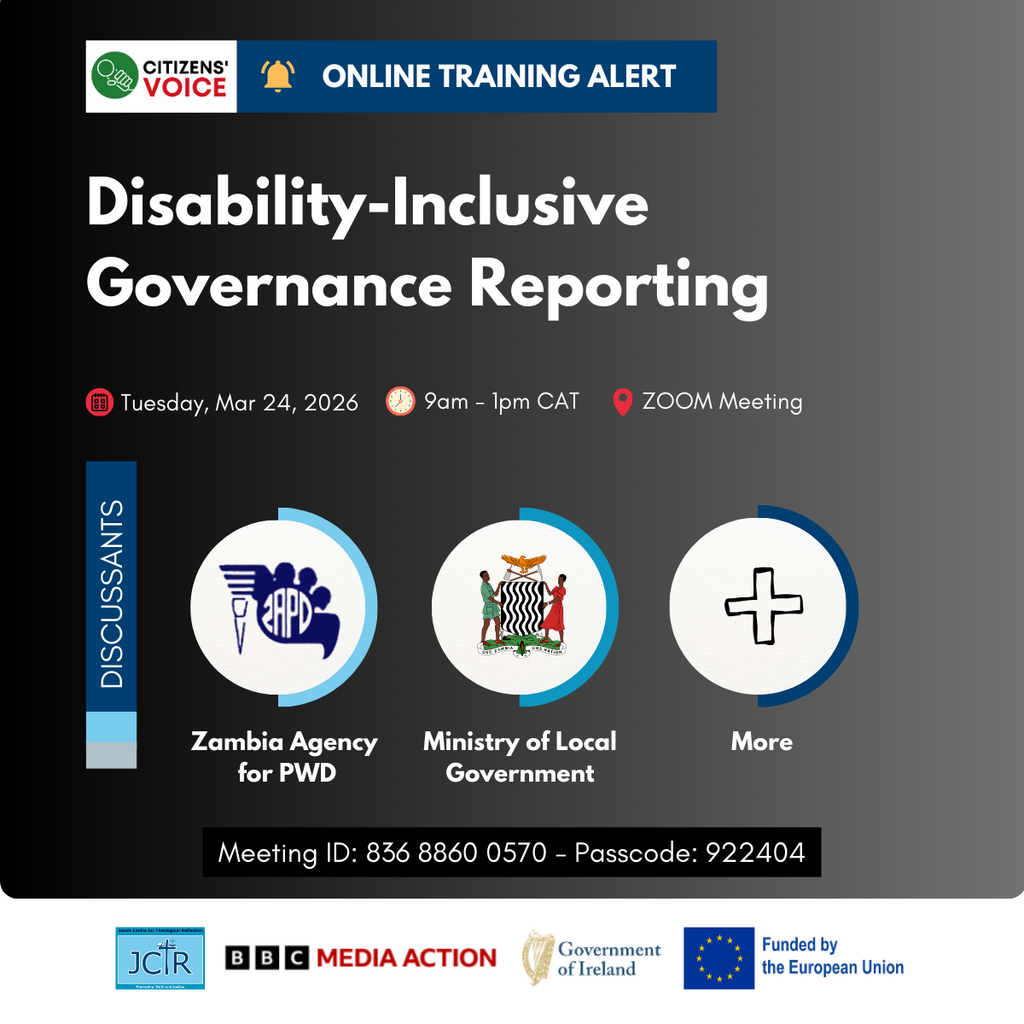
To respond to this challenge, the Jesuit Centre for Theological Reflection (JCTR), under the Citizens' Voice Project in partnership with BBC Media Action, is hosting an Online Training on Disability-Inclusive Governance Reporting.
Date: Tuesday, March 24, 2026
Time: 09:00 AM – 1 PM CAT
Platform: Zoom
Join here: https://us02web.zoom.us/j/83688600570?pwd=aPZNiyYlDx0D7IbBbqfCraE4ruM5GH.1
This four-hour virtual training will bring together journalists and listening group members from across Zambia to strengthen their understanding of disability governance and improve how disability issues are reported.
Participants will engage with key institutional partners, including the Zambia Agency for Persons with Disabilities (ZAPD) and the Ministry of Community Development and Social Services. The sessions will explore the legal and policy frameworks governing disability rights, as well as the social protection systems designed to support PwDs.
Importantly, the training will address the persistent gap between policy and practice. While Zambia has strong frameworks on paper, implementation challenges continue to limit access to essential services, assistive devices, and social protection. Participants will be equipped to identify these gaps and report on them in a way that promotes accountability.
The training also places strong emphasis on shifting media narratives. Too often, disability is framed through a charity lens. This initiative seeks to reposition PwDs as rights-holders—ensuring reporting is grounded in dignity, accuracy, and inclusion. Participants will gain practical skills in ethical storytelling, inclusive language, and sourcing that centres the voices of persons with disabilities.
By the end of the session, participants are expected to be better equipped to:
As Zambia continues to pursue inclusive development, strengthening media and citizen engagement remains essential. This training is a step towards ensuring that no voice is left behind.

"A just Zambian society guided by faith, where everyone enjoys the fullness of life".