
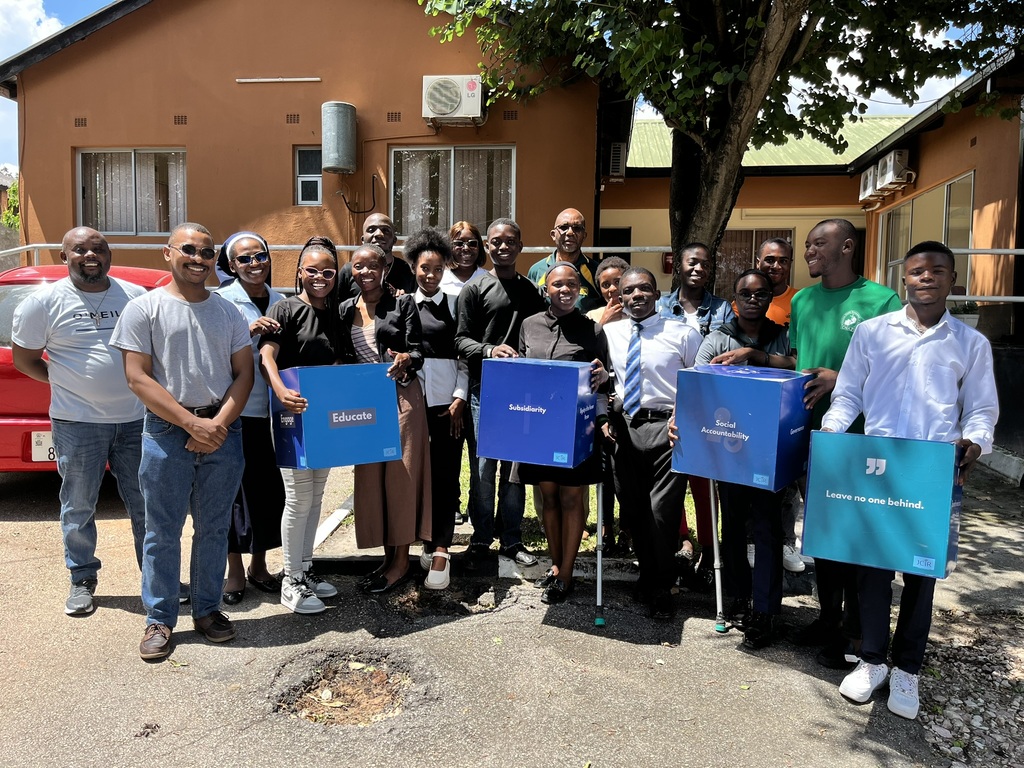
On Friday, February 27, 2026, the Jesuit Centre for Theological Reflection (JCTR) conducted an alpha pre-testing exercise in Lusaka as part of its ongoing technical partnership with WaterAid Zambia under the project “Strengthening Inclusive and Resilient WASH Accountability.” The initiative seeks to strengthen community-led accountability in the Water, Sanitation, and Hygiene (WASH) sector through practical tools, training, and digital data systems designed to empower citizens to monitor service delivery and engage duty bearers more effectively.
The partnership brings together JCTR’s established experience in community-level advocacy, participatory toolkit development, and digital data collection with WaterAid Zambia’s technical expertise and longstanding engagement in WASH programming across the country. A key output of the collaboration is the development of a WASH Social Accountability Toolkit alongside a Training of Lead Trainers programme, which will be implemented in Monze District in Southern Province and Nkeyema District in Western Province.
Beyond simply monitoring the availability of services, the initiative connects WASH service delivery to broader questions of public finance transparency, institutional accountability, and citizen oversight. In doing so, the project seeks to ensure that communities are not only observers of service delivery but active participants in shaping the quality and accessibility of essential public services.
The approach is firmly grounded in a Human Rights-Based framework, recognising access to safe water and sanitation as a fundamental right. Gender equality and social inclusion (GESI) are central to this framework, ensuring that the voices and lived experiences of women, youth, and persons with disabilities are reflected in how accountability processes are designed and implemented.
Before introducing the social accountability tools in the two pilot districts, JCTR undertook the alpha pre-testing session in Lusaka to assess the functionality, usability, and accessibility of the digital platforms under realistic but controlled conditions. The exercise was designed to answer a simple but critical question: Are these tools practical and accessible for the people who will ultimately use them?
Participants were intentionally drawn from a diverse pool of young people, including persons with disabilities. This diversity was a deliberate methodological choice aligned with the project’s GESI commitments. Digital tools designed only for highly experienced users often fail in real community settings. By involving individuals with varying levels of digital literacy and lived experiences, the testing process ensured that the platforms were evaluated through a wide range of perspectives.
During the session, participants engaged with the full suite of digital tools, including the Kobo Toolbox data entry forms that community monitors will use to collect and submit information on WASH service delivery. The exercise allowed participants to interact directly with the platforms while providing structured feedback on several aspects of usability, such as clarity of instructions, ease of navigation, accessibility considerations, and areas where the interface created confusion or slowed down the data entry process.
The exercise demonstrated that the tools were broadly accessible, with participants across the spectrum of digital familiarity able to engage with the platforms and offer constructive feedback. Importantly, every participant was able to share insights on the usability of the tools, ensuring that the evaluation process reflected genuine user experience rather than technical assumptions.
The alpha pre-testing confirmed several core design assumptions while also highlighting areas requiring refinement before field deployment. Participants identified specific improvements that could enhance clarity, simplify navigation, and strengthen accessibility features. These insights are now being incorporated into the final configuration of the digital tools.
This iterative learning process is critical. By identifying and addressing potential challenges at an early stage, the project team ensures that the digital architecture is fit for purpose when deployed in real community contexts.
As the initiative moves toward piloting in Monze and Nkeyema, the strengthened tools will support trained community monitors in collecting reliable information on WASH service delivery. The resulting data will contribute to evidence-based advocacy and more informed engagement with local authorities and service providers.
Ultimately, the alpha pre-testing exercise represents more than a technical milestone. It reflects a broader commitment by JCTR and WaterAid Zambia to participatory design, inclusive digital systems, and community-driven accountability, ensuring that the mechanisms intended to empower communities are shaped by the diverse users who will rely on them.



"A just Zambian society guided by faith, where everyone enjoys the fullness of life".