
Friday, May 15, 2026
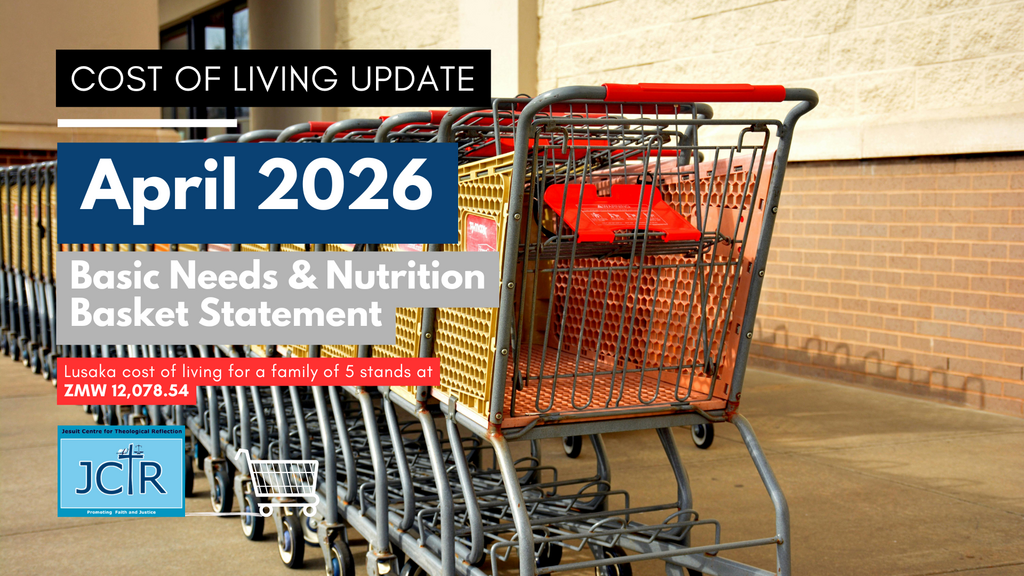
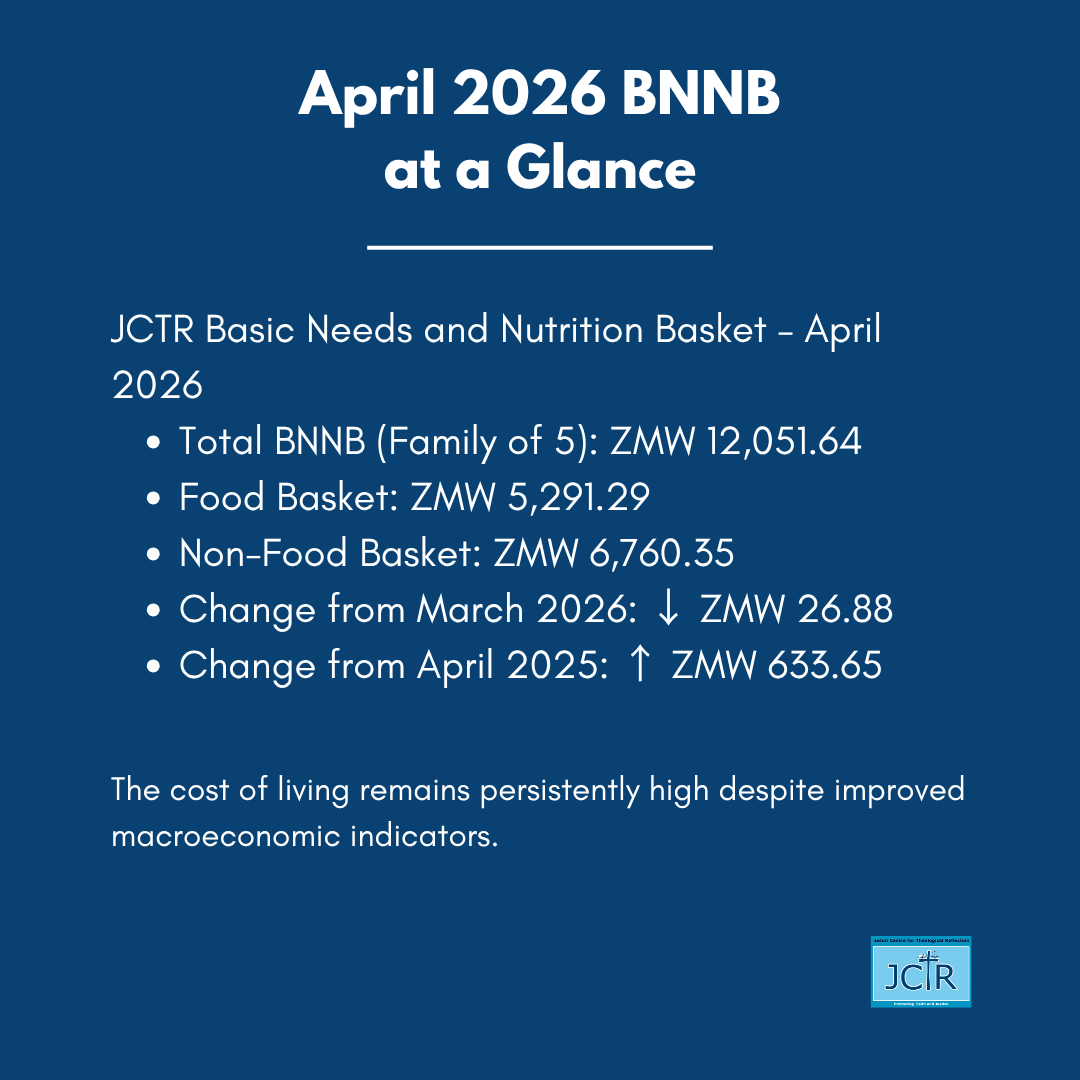
Lusaka, Zambia – The Jesuit Centre for Theological Reflection (JCTR) Basic Needs and Nutrition Basket (BNNB) for a family of five in Lusaka stood at ZMW 12,051.64 in April 2026, compared to ZMW 11,417.99 in April 2025. This represents an increase of ZMW 633.65 over the past one year, highlighting that despite improvements in key macroeconomic fundamentals, the cost of living for ordinary households remains persistently high. While some indicators point to economic stabilization, many families, particularly the poor and vulnerable, continue to struggle to meet their most basic needs with dignity.
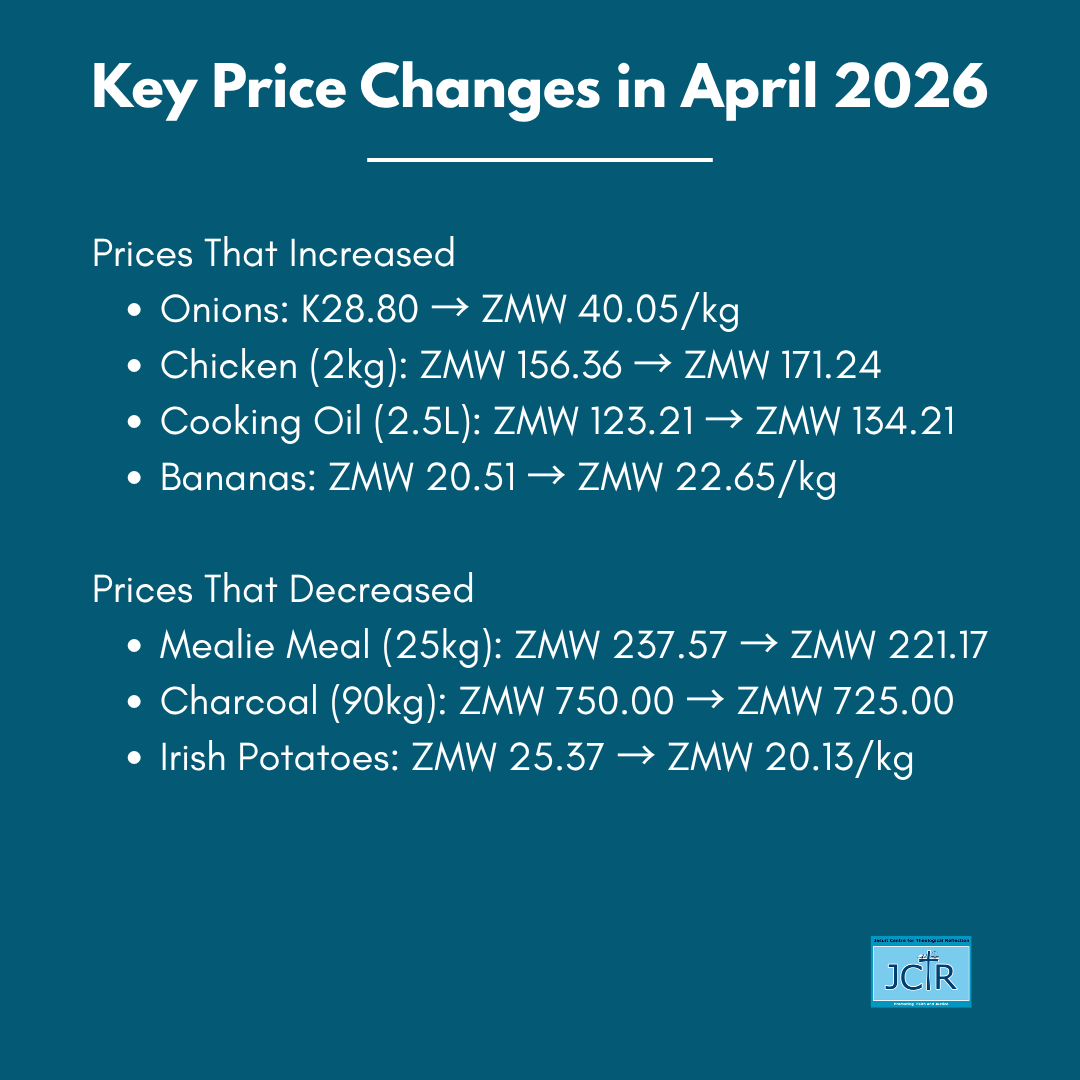
Of the ZMW 12,051.64 April 2026 BNNB for a family of five in Lusaka, the essential food component of the basket recorded a marginal increase from ZMW 5,270.73 in March to ZMW 5,291.29 in April, driven mainly by rising prices of key food items such as onions, which increased from ZMW 28.80 to ZMW 40.05 per kilogram, chicken from ZMW 156.36 to ZMW 171.24 for 2kg, and bananas from ZMW 20.51 to ZMW 22.65 per kilogram. Partially offsetting these increases were marginal declines in the prices of other fruits from ZMW 49.70 to ZMW 46.61 per kilogram, mealie meal from ZMW 237.57 to ZMW 221.17 for a 25kg bag, and Irish potatoes from ZMW 25.37 to ZMW 20.13 per kilogram. The total cost of essential non-food items declined to ZMW 6,760.35 from ZMW 6,807.79 in March, largely due to a reduction in the price of charcoal from ZMW 750.00 to ZMW 725.00 for a 90kg bag. Despite these adjustments, the overall basket only declined marginally by ZMW 26.88 from ZMW 12,078.52 recorded in March 2026.
The continued rise in the prices of essential food items, including cooking oil, which increased from ZMW 123.21 to ZMW 134.21 for 2.5 litres, continues to undermine food security, nutrition, and household welfare. For many low-income families, these rising costs are not simply economic statistics but daily realities that threaten their ability to live with dignity and hope.
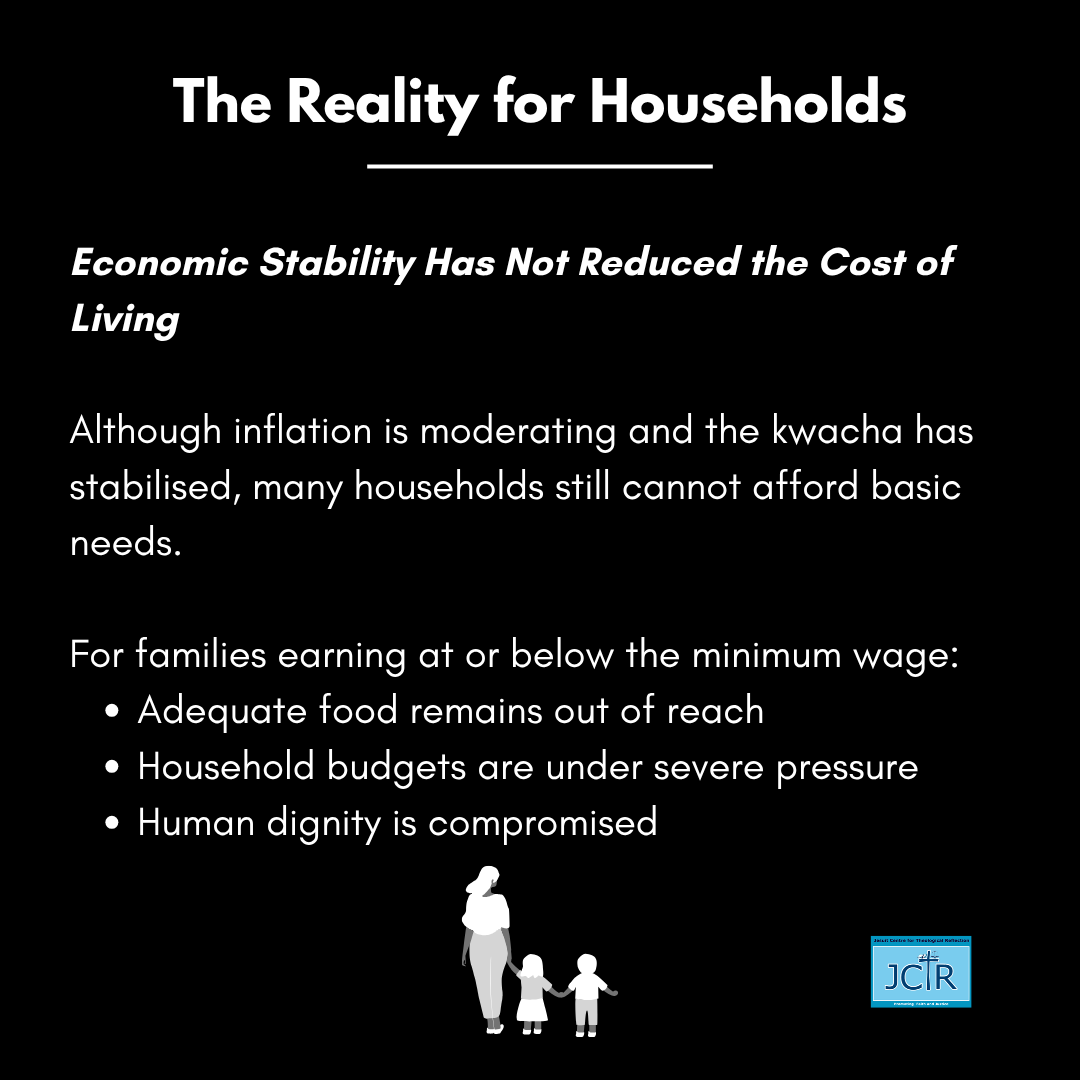
Recent improvements in macroeconomic fundamentals, including declining inflation and relative currency stability, are important developments for the broader economy. However, the lived experiences of ordinary citizens reveal that these gains have not yet translated into affordable living conditions for many households. Inflation may have moderated at the aggregate level, but the prices of several essential commodities continue to place immense pressure on household budgets. This highlights the persistent disconnect between macroeconomic progress and the welfare realities faced by poor and vulnerable communities.
The continued elevation of the BNNB underscores deeper structural challenges that cannot be addressed through market adjustments alone. Households earning at or below the minimum wage remain unable to meet the cost of basic needs, reflecting entrenched inequalities, inadequate income opportunities, and limited social protection mechanisms. The burden of high living costs falls disproportionately on the poor, whose dignity is compromised when access to adequate food, shelter, energy, health, and other essentials becomes increasingly unattainable.
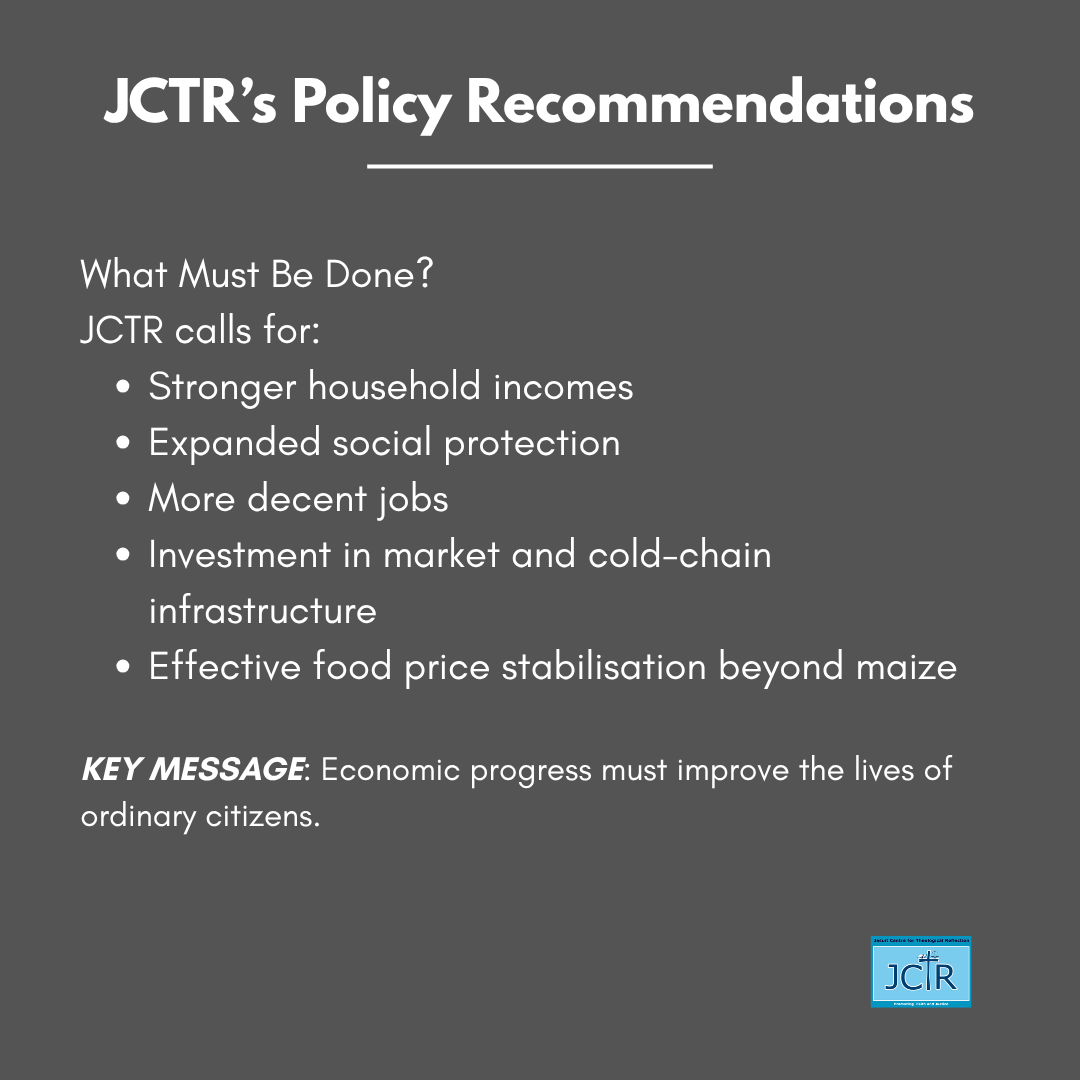
In line with the principle of the preferential option for the poor, there is urgent need for deliberate and sustained policy interventions that place vulnerable households at the centre of economic decision-making. Addressing the cost-of-living crisis requires targeted measures to strengthen household incomes, expand social protection coverage, improve decent work opportunities, and reduce the structural costs associated with essential services and commodities.
To safeguard household welfare and uphold human dignity, the JCTR calls for responsive and people-centered policy measures that directly address the unequal burden of the high cost of living. The fluctuations in food prices continue to reveal supply chain fragility and weak cold-chain infrastructure. It is therefore vital to prioritize targeted investment in market infrastructure and agro-dealer networks for perishables, while also reviewing the effectiveness of food price stabilization mechanisms beyond maize.
Ensuring that economic policies are inclusive, equitable, and responsive to the realities of ordinary citizens is essential to building a resilient Zambia where all people can live in dignity and fullness of life. Addressing the structural dimensions of the cost-of-living crisis is not only a matter of social justice, but also a necessary foundation for sustainable economic growth, poverty reduction, and shared national prosperity.
Issued by: Ms. Lukwesa Musonda – Acting Social and Economic Development Programme Manager
For further clarifications, contact the Social and Economic Development (SED) Programme at the Jesuit Centre for Theological Reflection (JCTR) on 0955290410, or email info@jctr.org.zm and admin@jctr.org.zm. Address: Martin Mwamba Road, Plot 3813, Olympia Park, Lusaka. Postal: P.O. Box 37774, Lusaka – Zambia.

"A just Zambian society guided by faith, where everyone enjoys the fullness of life".